By using this site, you agree to the Privacy Policy and Terms of Use.
Accept
Media HydeMedia Hyde
  • Home
  • Politics
  • Education
  • Entertainment
  • Sports
  • Blogs
  • Business & Commerce
  • Others
    • Religious
    • Metropolitan
    • Climate and Weather
Font ResizerAa
Media HydeMedia Hyde
Font ResizerAa
  • Home
  • Politics
  • Education
  • Entertainment
  • Sports
  • Blogs
  • Business & Commerce
  • Others
    • Religious
    • Metropolitan
    • Climate and Weather
Follow US
© 2026 Media Hyde Network. All Rights Reserved.
Climate and WeatherHeadline

New Fossil Study Reveals Fresh Insights Into Triceratops

Last updated: August 1, 2026 12:39 am
Haris Ali
Share
New Fossil Study Reveals Fresh Insights Into Triceratops
SHARE

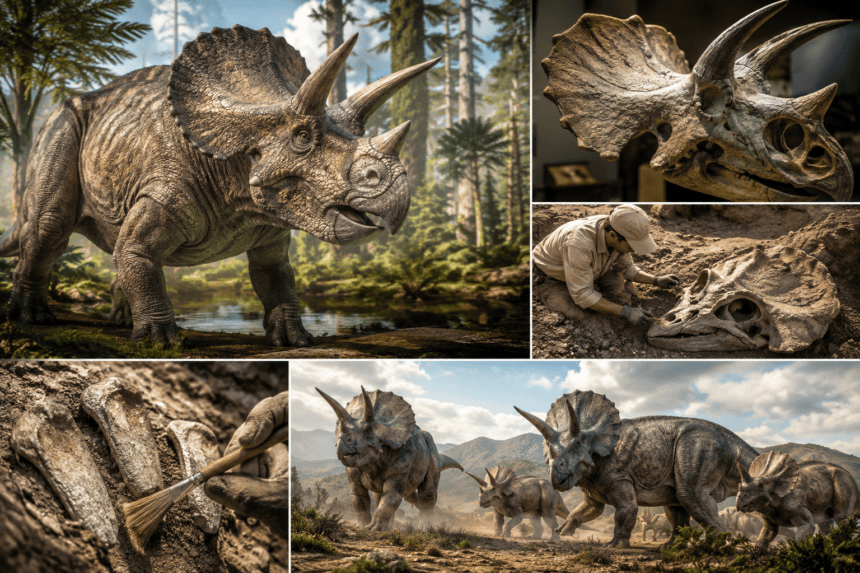
A new fossil study has provided scientists with fresh insights into Triceratops, one of the most recognizable dinosaurs of the Late Cretaceous Period. The latest research is helping paleontologists better understand the dinosaur’s anatomy, growth, behavior, and its role in prehistoric ecosystems approximately 66 to 68 million years ago.

Researchers examined newly analyzed fossil skulls, horns, and skeletal remains using advanced 3D imaging, CT scanning, and digital reconstruction techniques. The findings suggest that Triceratops underwent significant physical changes as it matured, with its horns and large neck frill becoming more developed throughout its life.

Triceratops, whose name means “three-horned face,” was a large herbivorous dinosaur that measured up to 9 meters (30 feet) in length and weighed between 6 and 12 tonnes. It is best known for its two long brow horns, smaller nose horn, and broad bony frill that protected its neck.

Scientists believe the dinosaur used its horns and frill for more than just defense against predators. Evidence suggests these features may also have played a role in displaying strength, recognizing members of the same species, competing for mates, and possibly regulating body temperature.

The study also indicates that Triceratops possessed a powerful beak and hundreds of tightly packed teeth designed to slice through tough vegetation. Researchers say it likely fed on ferns, cycads, palms, and other low-growing plants that covered prehistoric landscapes.

Fossil evidence confirms that Triceratops lived alongside Tyrannosaurus rex, making it one of the apex predator’s most formidable potential prey species. Scientists continue to investigate whether the dinosaur primarily relied on its horns for defense or also used them during competition with other Triceratops.

Experts emphasize that each new fossil discovery improves understanding of dinosaur biology, evolution, and behavior. They hope future discoveries will reveal even more about how Triceratops lived, interacted with its environment, and adapted during the final chapter of the age of dinosaurs.


Share This Article
Email Copy Link Print
Previous Article Scientists Reveal New Insights Into the Giant Carcharodontosaurus Scientists Reveal New Insights Into the Giant Carcharodontosaurus
Next Article Powerful Hurricane Threatens Coastal Communities as Emergency Warnings Issued Powerful Hurricane Threatens Coastal Communities as Emergency Warnings Issued
Leave a Comment

Leave a Reply Cancel reply

Your email address will not be published. Required fields are marked *

Sponsored Ads

Stay Connected

FacebookLike
XFollow
InstagramFollow
YoutubeSubscribe
WhatsAppFollow
ThreadsFollow
Bright Comet Gives Scientists New Clues About the Early Solar System
Climate and Weather Headline
August 1, 2026
Scientists Reveal New Secrets About Saturn and Its Iconic Rings
Climate and Weather Headline
August 1, 2026
Scientists Explore the Possibility of Parallel Universes
Climate and Weather Headline
August 1, 2026
Scientists Reveal New Insights Into Neptune’s Mysterious Atmosphere
Climate and Weather Headline
August 1, 2026
Scientists Uncover New Secrets About Dying Stars
Climate and Weather Headline
August 1, 2026
New Mars Discoveries Bring Scientists Closer to Uncovering the Planet’s Past
Climate and Weather Headline
August 1, 2026

You Might Also Like

Climate and Weather

US Moves to Dismantle Top Climate Research Hub

By
Sana Mustafa
Minister Khichi Unveils First Three Volumes of Revised Historical Urdu Dictionary
CultureHeadline

Minister Khichi Unveils First Three Volumes of Revised Historical Urdu Dictionary

By
Ayesha Masood
Climate and Weather

Balochistan, dry and cold conditions persist in Lahore

By
Anoosha Malik
Relentless storms paralyze central Chile as rivers burst banks
Climate and WeatherHeadline

Relentless storms paralyze central Chile as rivers burst banks

By
Haris Ali
Media Hyde Media Hyde Dark
Facebook Twitter Youtube Rss Medium

About US

Media Hyde Network: Your instant connection to breaking stories and live updates. Stay informed with our real-time coverage across politics, tech, entertainment, and more. Your reliable source for 24/7 News.

Top Categories
  • Headline
  • Politics
  • Entertainment
  • Education
  • Sports
  • Religious
  • Metropolitan
  • Climate and Weather
Usefull Links
  • Contact Us
  • Disclaimer
  • Privacy Policy
  • Cookies Policy
  • Advertising Policy
  • Terms & Conditions

© 2025 Media Hyde Network. All Rights Reserved.

Welcome Back!

Sign in to your account

Username or Email Address
Password

Lost your password?