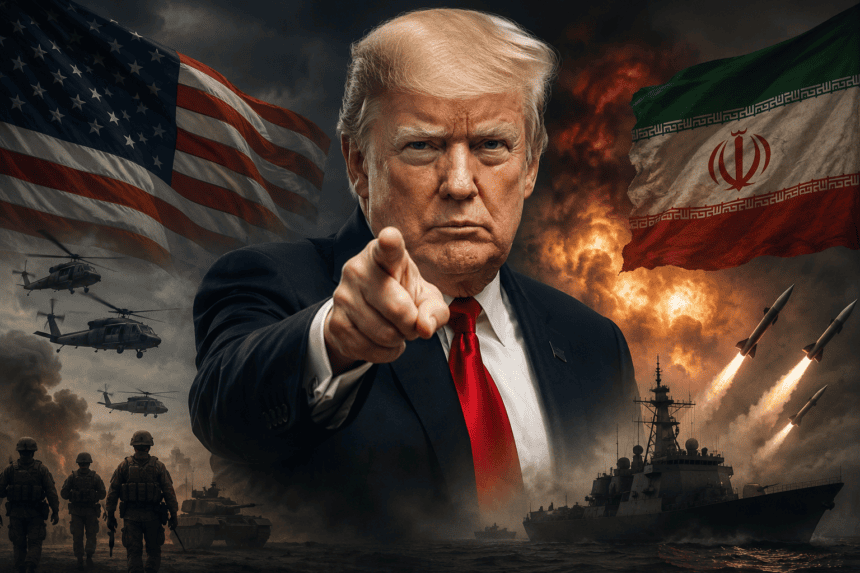
Donald Trump has signaled a sharp shift in foreign policy rhetoric, declaring that Iran will “pay a heavy price” following a string of recent attacks that resulted in the deaths of American service members. The former president, addressing supporters at a rally, framed the incidents as a direct failure of the current administration’s deterrence strategy.
The vow comes as tensions in the Middle East reach a boiling point. For months, US bases across Iraq and Syria have faced persistent drone and rocket fire from regional militias. The recent fatalities mark a significant escalation, pushing the debate over American military involvement in the region to the forefront of the political conversation.
Trump’s stance is clear: he characterizes the current administration’s response as “weak and ineffective.” He claims that during his own term, the threat of immediate, overwhelming retaliation kept adversaries at bay. “They knew not to cross the line,” he told the crowd. “Now, they don’t fear us anymore.”
Pentagon officials have remained more measured in their public statements, citing ongoing investigations into the specific origin of the munitions used in the fatal attacks. While the White House has acknowledged the gravity of the losses, it continues to navigate the thin line between holding perpetrators accountable and avoiding a wider, uncontrollable regional conflict.
The geopolitical math is complicated. Analysts point out that Iran operates through a network of proxies, providing a layer of deniability that makes direct retaliation difficult. A strike inside Iranian borders would be a massive gamble, potentially triggering a full-scale war that neither Washington nor Tehran officially wants.
Still, the political pressure on the White House is mounting. Lawmakers from both sides of the aisle are demanding a firmer response, arguing that the death of American soldiers requires more than just diplomatic condemnation.
For Trump, the tragedy is a tool to contrast his “peace through strength” doctrine with the current administration’s approach. He isn’t offering a specific military plan, but he is setting a baseline for what his supporters expect: a return to a more aggressive, uncompromising posture on the global stage.
Whether this rhetoric reflects a genuine shift in future policy or simply serves as a campaign-trail critique, the message to Tehran is unmistakable. The window for restraint, according to the former president, has closed.