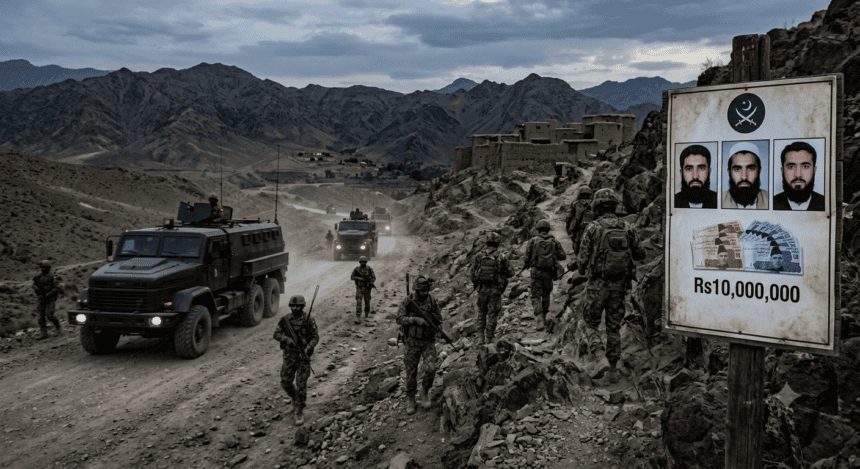
The Interior Ministry has authorized a Rs10 million bounty for information leading to the capture of key terrorists, signaling a shift in the state’s approach to dismantling militant networks. Officials confirmed the move late Wednesday, targeting individuals accused of orchestrating recent attacks on security personnel and critical infrastructure.
The decision follows a surge in violence across Khyber Pakhtunkhwa and Balochistan. Security agencies have struggled to contain the resurgence of armed groups, and the bounty serves as a blunt instrument to incentivize local intelligence gathering in areas where militant presence has grown.
“We are no longer relying solely on kinetic operations,” said a senior official within the security apparatus. “We need the public to act as our eyes and ears. The state is prepared to pay for results.”
The ministry hasn’t released a full list of names to the public, citing operational security. However, intelligence briefings indicate the primary targets are commanders linked to the TTP and various Baloch insurgent factions. These figures have remained elusive, moving across porous borders and exploiting local grievances to maintain their grip on remote districts.
Economic instability complicates the state’s security strategy. With the national budget under extreme pressure, the allocation of these funds reflects a prioritized effort to neutralize specific threats rather than broad-scale military deployments that drain the treasury.
Critics argue that cash rewards have a mixed track record in Pakistan. Past bounties often led to false leads or, worse, targeted killings driven by local vendettas rather than national security interests. The government claims it has implemented a stricter vetting process for informants to ensure the money produces actionable intelligence rather than chaos.
Whether this move disrupts the current wave of violence remains the primary question. For the residents of affected districts, the bounty is a stark reminder of the state’s inability to secure its territory through traditional means alone.
The interior minister is expected to provide further clarity during a press briefing on Friday, though sources indicate the government is prepared to increase the reward amounts if current efforts fail to yield high-value arrests by the end of the quarter.