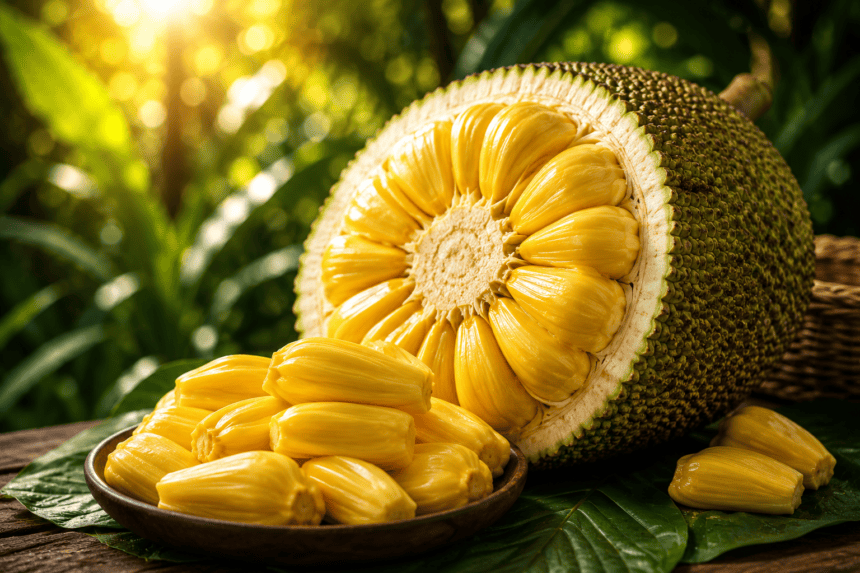
Jackfruit is the largest tree-borne fruit in the world and a favorite in many tropical countries. Known for its sweet taste, unique texture, and impressive size, jackfruit has gained worldwide popularity not only as a delicious fruit but also as a nutritious food.
Ripe jackfruit is enjoyed as a sweet snack, while young green jackfruit is often used as a meat alternative in curries and other savory dishes. Rich in vitamins, minerals, antioxidants, and dietary fiber, jackfruit can be a healthy addition to a balanced diet.
But what makes this tropical fruit so special? Let’s explore its nutrition, health benefits, and the best ways to enjoy it.
What Is Jackfruit?
Jackfruit (Artocarpus heterophyllus) grows on evergreen trees native to South and Southeast Asia. A single fruit can weigh anywhere from 10 to over 50 kilograms, making it the largest fruit that grows on a tree.
Both ripe and unripe jackfruit are edible and widely used in traditional cooking.
Nutritional Value
Jackfruit provides several important nutrients, including:
- Vitamin C
- Vitamin A
- Potassium
- Magnesium
- Dietary fiber
- B vitamins
- Natural antioxidants
It is naturally free of cholesterol and contains very little fat.
1. Rich in Vitamin C
Jackfruit is an excellent source of vitamin C, an important nutrient that supports the immune system and helps protect cells from oxidative stress.
Vitamin C also plays a role in collagen production, which is important for healthy skin, blood vessels, and connective tissues.
2. Supports Digestive Health
Jackfruit contains dietary fiber that helps support healthy digestion.
Fiber contributes to regular bowel movements and helps nourish beneficial gut bacteria.
Eating enough fiber as part of a balanced diet is associated with better digestive health.
3. A Good Source of Antioxidants
Jackfruit contains plant compounds such as carotenoids and flavonoids.
These antioxidants help protect the body’s cells from damage caused by unstable molecules known as free radicals.
A diet rich in antioxidant-containing fruits and vegetables supports overall health.
4. Helps You Feel Full
The combination of fiber and natural carbohydrates makes jackfruit a satisfying fruit.
When eaten in appropriate portions, it can help satisfy hunger and may reduce the temptation to snack on less nutritious foods.
5. Provides Potassium
Potassium is an essential mineral that helps maintain normal muscle function, nerve signaling, and healthy blood pressure.
Including potassium-rich foods like jackfruit can contribute to a balanced diet.
6. Green Jackfruit as a Meat Alternative
Young green jackfruit has a texture similar to shredded meat after cooking.
For this reason, it is often used in vegetarian and vegan recipes such as tacos, curries, sandwiches, and stir-fries.
However, while it is a good source of fiber, it does not provide as much protein as meat, beans, lentils, or soy products.
Healthy Ways to Enjoy Jackfruit
You can include jackfruit in your diet by:
- Eating ripe jackfruit as a fresh snack
- Adding it to fruit salads
- Blending it into smoothies
- Cooking green jackfruit in curries
- Using it in wraps and sandwiches
- Mixing it with vegetables and legumes
Choose fresh fruit whenever possible and limit products with added sugar.
Are There Any Precautions?
Jackfruit is generally safe for most healthy people.
Because it contains natural sugars and carbohydrates, portion size is important, especially for people managing diabetes or watching their carbohydrate intake.
People with known allergies to jackfruit should avoid it.
The Bottom Line
Jackfruit is more than just a tropical delicacy—it is a nutrient-rich fruit that provides fiber, vitamins, minerals, and antioxidants.
Whether you enjoy it ripe as a sweet fruit or unripe in savory dishes, jackfruit can be a delicious part of a healthy, balanced diet.
Adding a variety of fruits like jackfruit to your meals is a simple way to boost your nutrient intake and enjoy nature’s diverse flavors.