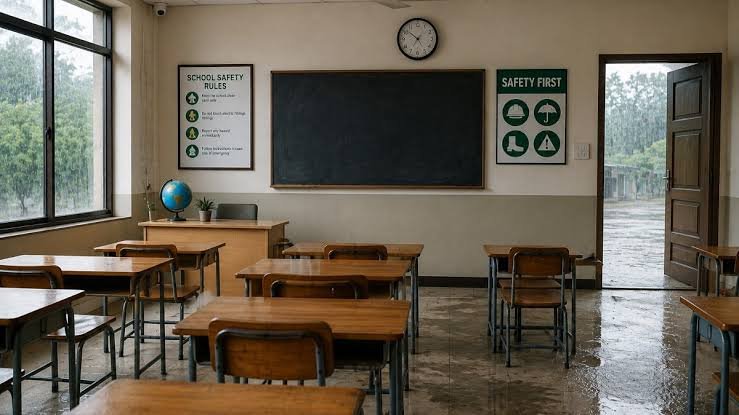
RAWALPINDI, Pakistan — August 20, 2026: The Rawalpindi district administration has issued urgent safety directives for private schools following persistent monsoon rains, with authorities calling on school managements to take immediate steps to protect students and staff.
The instructions were issued by the Deputy Commissioner Rawalpindi and are aimed at reducing risks associated with heavy rainfall, water accumulation, damaged structures and electrical hazards on school premises.
Under the new directives, private schools have been instructed to clear their rooftops and ensure that rainwater does not accumulate on buildings. School administrations have also been told to inspect their premises for structural weaknesses that could become dangerous during or after periods of heavy rain.
Authorities have particularly stressed the need to address electrical hazards. School managements have been directed to secure electric poles, hanging wires and other potentially dangerous electrical fittings on their premises. Any damaged or unsafe electrical installations are expected to be dealt with promptly to reduce the risk of accidents.
Schools have also been instructed to identify and report damaged or unsafe portions of buildings to the district administration. The measures are intended to ensure that structural problems are identified before they can pose a threat to students, teachers or other school employees.
Another key instruction concerns access to potentially dangerous areas during rainy weather. Students are to be kept away from rooftops and other high-risk parts of school buildings, particularly when rain or adverse weather conditions could make these areas unsafe.
The directives come amid continuing monsoon-related weather concerns in Rawalpindi and other parts of Punjab. Earlier weather advisories have warned of heavy rainfall and possible urban flooding in Rawalpindi, while strong winds and lightning can also damage vulnerable structures and electrical infrastructure.
The district administration’s latest instructions place responsibility on private-school managements to ensure that their campuses are properly inspected and maintained during the monsoon season. Schools are expected to take preventive action rather than wait for dangerous conditions or structural problems to develop.
The measures are particularly important because schools accommodate large numbers of students and staff each day. Ensuring clear rooftops, safe electrical installations, sound structures and restricted access to hazardous areas can help reduce the risks associated with severe weather.
School administrations have therefore been urged to treat the instructions as an immediate safety priority and ensure compliance across their premises as the monsoon season continues.