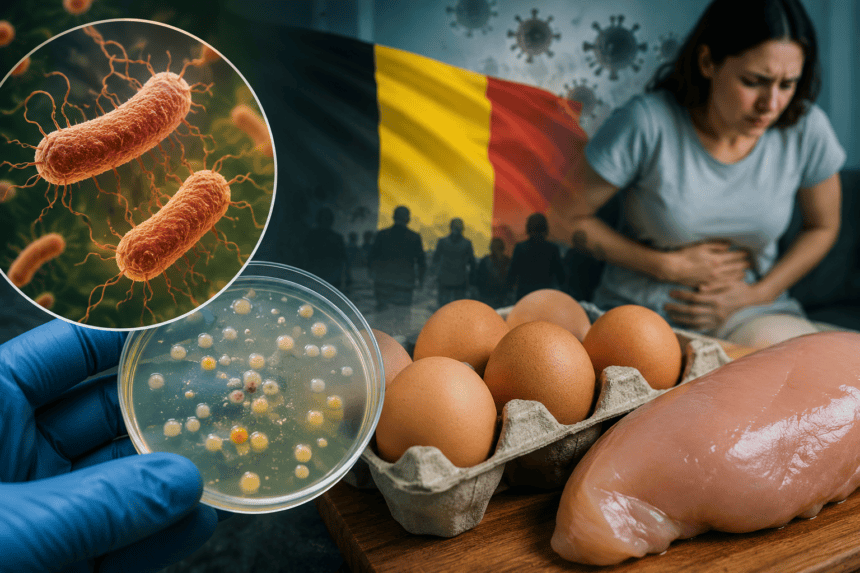
Health authorities in Belgium have confirmed at least 306 cases of Salmonella, sparking a national investigation into the source of the contamination. The spike in infections, recorded over the past several weeks, has triggered urgent food safety warnings across the country.
The Federal Agency for the Safety of the Food Chain (FASFC) is leading the probe. While they haven’t pinned down a single culprit, initial findings point to a specific batch of contaminated food products currently being pulled from supermarket shelves.
“We are tracking every lead,” a spokesperson for the agency said Tuesday. They declined to name the specific retail chains involved, citing the ongoing nature of the investigation.
For the hundreds affected, the reality has been far from administrative. Victims reported symptoms ranging from severe abdominal cramps and high fever to persistent dehydration. Public hospitals in Brussels and Antwerp saw a surge in emergency admissions throughout the last ten days, with several patients—mostly children and the elderly—requiring intravenous rehydration.
The outbreak mirrors a broader trend across Europe, where salmonella clusters have become increasingly difficult to trace due to complex, multi-national supply chains. Belgian officials are now coordinating with the European Food Safety Authority to determine if the tainted products reached neighboring borders.
Retailers caught in the recall are scrambling to update their inventory systems. Several major grocery chains issued preemptive notices to customers, advising anyone who purchased specific pre-packaged meat or dairy items within the last fortnight to return them immediately for a full refund.
Health experts warn that the true number of infections is likely higher than the 306 officially logged. Many people suffering from milder cases often recover at home without seeking medical attention, meaning they never enter the formal reporting system.
The agency plans to release a comprehensive list of the affected product batches by Thursday morning. Until then, the message from the health ministry is blunt: if in doubt, throw it out.