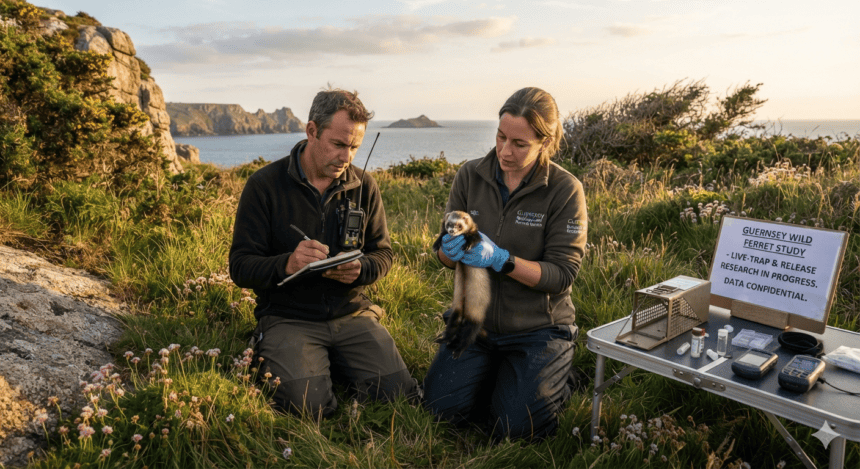
Guernsey’s elusive wild ferret population is finally getting the scientific spotlight. Researchers have launched a comprehensive study to track the animals, hoping to determine exactly how many are roaming the island and how they’ve managed to thrive outside of captivity.
For years, sightings of ferrets in Guernsey’s countryside have been treated as anecdotal. Residents frequently spot them darting through hedgerows or near farm buildings, yet the island’s wildlife authorities have never had a clear picture of their numbers or their impact on the local ecosystem.
This project changes that. By deploying non-invasive tracking methods—including motion-sensor cameras and hair-sampling stations—biologists intend to map the ferrets’ range. They aren’t just counting heads; they are looking at how these animals, often considered domestic pets elsewhere, navigate a landscape dominated by human activity.
The “so what” here is simple: ecological balance. Ferrets are predators. If their numbers are higher than previously estimated, they could be putting significant pressure on local rabbit populations and ground-nesting birds. Understanding their density allows conservationists to decide whether they need to be managed as an invasive threat or accepted as a permanent, if unofficial, part of the island’s fauna.
Previous attempts to quantify the population were limited by the ferret’s natural shyness. They are nocturnal, fast, and remarkably good at avoiding detection. This current effort focuses on specific “hotspots” identified by local gamekeepers and farmers who have dealt with the animals firsthand.
The data gathered will likely settle a long-standing debate among islanders: are these ferrets descendants of escaped pets, or have they established a self-sustaining wild colony that has been here for generations?
“We need the facts before we can make any policy decisions,” said one lead researcher involved in the project. “Right now, we are operating on guesswork. That ends with this study.”
Fieldwork is expected to continue through the coming months, with results slated for review by the end of the year. If the numbers show a booming population, Guernsey’s wildlife management team will face a difficult choice: leave the ferrets to their own devices or initiate a formal control program. For now, the island’s most secretive residents remain a mystery.