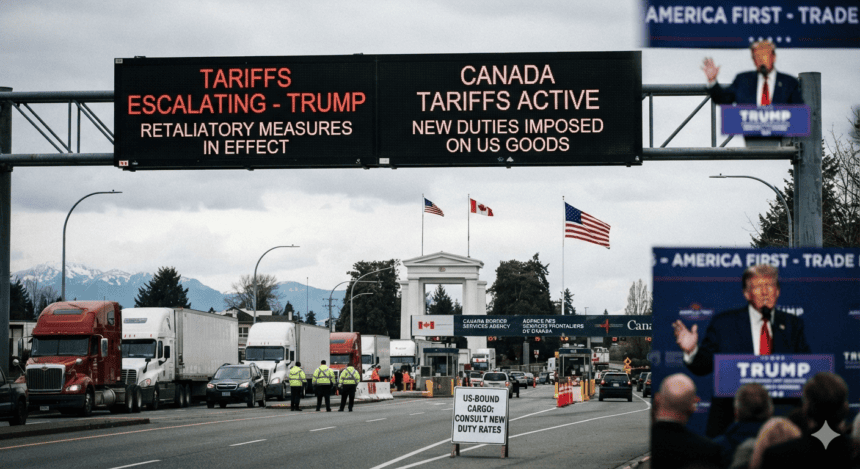
OTTAWA — Canada is finalizing a list of retaliatory tariffs on U.S. goods, bracing for the impact of President-elect Donald Trump’s vow to impose a 25% levy on all Canadian imports.
The move signals a return to the volatile trade diplomacy of 2018. Canadian officials are currently identifying specific American products — ranging from agricultural items to manufactured components — that could face reciprocal duties. The goal is a proportional response, designed to inflict economic pressure on key U.S. political districts without triggering a broader collapse in North American supply chains.
The White House transition team has framed the proposed 25% tariff as a leverage tool, citing concerns over border security and the flow of illicit substances. For Ottawa, the optics are clear: the threat is a direct challenge to the integrated nature of the two economies, where nearly $3 billion in goods cross the border daily.
“We aren’t looking for a fight, but we aren’t going to be a punching bag,” a senior official in the Prime Minister’s Office said on the condition of anonymity. “If the U.S. chooses to tax our workers, we will ensure that decision has a real-world cost for them.”
The stakes are immense. Canada sends 75% of its exports to the United States. A blanket tariff would hit the Canadian energy sector, the automotive industry, and the forest products market simultaneously. Bank of Canada analysts have privately warned that such a move could shave nearly 1% off the country’s GDP within the first year, potentially pushing an already fragile economy into a technical recession.
Business leaders are now scrambling to adjust. Companies that rely on cross-border inputs are reconsidering their inventory strategies, while industry lobbyists in Washington are working to remind U.S. lawmakers that Canadian steel and aluminum are essential to the American defense industrial base.
Despite the rhetoric, the path remains narrow. Previous trade disputes between the two nations were resolved through the USMCA framework, but Trump’s team has signaled a willingness to bypass traditional dispute-resolution mechanisms.
The federal government in Ottawa is expected to release the finalized list of targeted U.S. goods by the end of the week. Whether this serves as a deterrent or the opening salvo in a prolonged trade war remains the central question for the North American economy.