KATHMANDU — The monsoon rains didn’t just fall this year; they reshaped the map of Nepal. After three days of relentless downpours, the death toll has climbed to 244, with dozens still missing in the mud and debris of a country struggling to find its footing.
The damage isn’t just in the loss of life. Entire sections of the BP Highway, the primary artery connecting the Kathmandu Valley to the eastern plains, remain severed. For those trapped in the capital, the isolation is absolute. Food prices are already spiking as supply chains buckle under the weight of destroyed bridges and washed-out mountain passes.
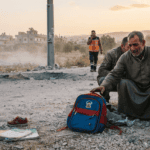
“We saw the river rise six feet in ten minutes,” said Ram Bahadur, a resident of Kavrepalanchok, one of the hardest-hit districts. He spoke from a makeshift shelter where three families are now sharing a single room. “We didn’t have time to save anything, not even our livestock.”
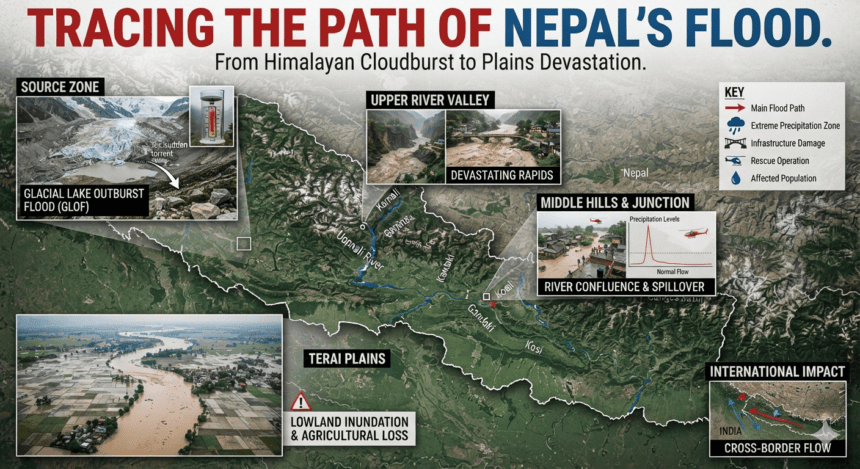
The scale of the disaster traces back to a localized but intense weather system that stalled over central Nepal. While the monsoon is a seasonal certainty, meteorologists point to an unpredictable atmospheric shift that dumped record-breaking rainfall over a 48-hour window. The topography—steep, fragile Himalayan slopes—turned that water into a kinetic force, triggering landslides that buried entire villages in minutes.
Government recovery efforts are currently stretched thin. Prime Minister K.P. Sharma Oli has deployed the Nepal Army for search-and-rescue operations, but the terrain is working against them. Heavy machinery cannot reach the most remote clusters of houses, forcing rescuers to dig through tons of silt and rock by hand.
Beyond the immediate crisis, the long-term outlook for these mountain communities is grim. The disaster has laid bare the inadequacy of early warning systems in high-altitude zones. While urban areas received alerts, many remote villages remained effectively invisible to the national grid until the roads collapsed.
Reconstruction will take years, not months. As the water recedes, the government faces a daunting reality: the infrastructure built to withstand the “normal” monsoon is no longer enough to handle the intensity of a changing climate. For thousands of displaced families, the path forward starts with clearing the mud from what used to be their homes.