New York: The world is moving toward a major climate milestone that scientists and policymakers have warned about for years: global warming is expected to permanently exceed the 1.5°C threshold set under the 2015 Paris Agreement.
A new United Nations Environment Programme (UNEP) assessment says crossing the threshold is now effectively unavoidable. However, the report stresses that this does not mean climate action has become pointless. The focus must now shift toward limiting how far temperatures rise, reducing the length of the overshoot and eventually bringing warming back down.
What Does 1.5°C Actually Mean?
The 1.5°C figure refers to global warming compared with the 1850–1900 pre-industrial average.
It is important to distinguish between short-term temperature spikes and the Paris Agreement’s long-term goal. Individual months or years can temporarily exceed 1.5°C because of natural climate variations, but the Paris target concerns sustained, long-term warming.
The warning is nevertheless becoming increasingly serious. The past three years, from 2023 to 2025, averaged more than 1.5°C above pre-industrial levels, according to Copernicus.
The World Is Already Experiencing the Consequences
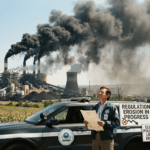
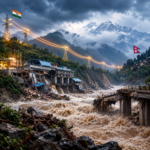
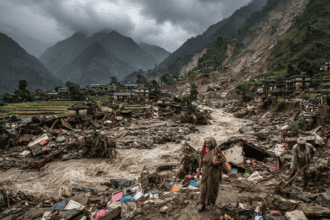
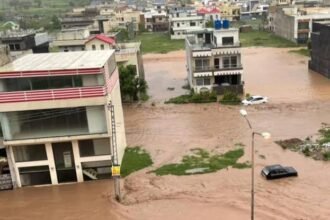
Higher temperatures are already contributing to more dangerous heatwaves, droughts, wildfires, floods and storms.
August 2026 was tied with July 2023 as the hottest month ever recorded globally, with the average temperature reaching about 1.65°C above pre-industrial levels. Scientists also recorded major climate-related disasters, including floods, landslides, wildfires and severe drought during the month.
Crossing the long-term 1.5°C threshold would increase the risks further, particularly for vulnerable communities and ecosystems.
Why Can’t the World Simply Stop at 1.5°C?
The main reason is the amount of greenhouse gases already being released into the atmosphere.
A June 2026 assessment estimated that the remaining carbon budget for maintaining a reasonable chance of staying below 1.5°C had fallen to around 130 billion tonnes of CO₂. At current emission levels, that budget could be exhausted in roughly three years.
Scientists therefore increasingly talk about an “overshoot” scenario: temperatures temporarily rise above 1.5°C before eventually declining.
What Happens After 1.5°C?
The answer is not that the planet suddenly becomes uninhabitable.
Instead, every additional fraction of a degree matters.
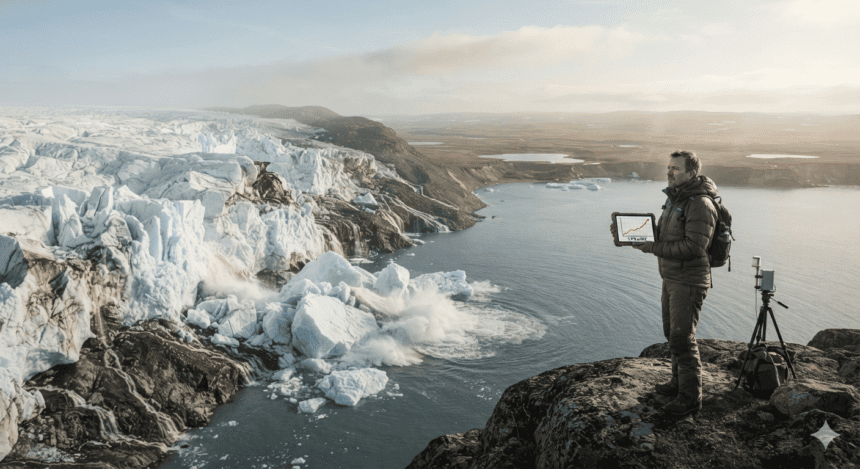
At higher levels of warming, extreme heat becomes more severe, glaciers and ice sheets face greater losses, sea levels continue to rise, ecosystems come under greater stress and risks to food and water security increase. Some damage may also become irreversible.
That is why scientists are urging governments not to treat the 1.5°C breach as a reason to give up.
The New Goal: Limit the Overshoot
UNEP’s latest assessment argues that the world should pursue an “overshoot, peak and decline” pathway.
That means:
- Rapidly cut greenhouse-gas emissions.
- Stop warming from rising as high as possible.
- Reach net-zero emissions.
- Remove some carbon dioxide from the atmosphere.
- Eventually bring global temperatures back below 1.5°C if possible.
Carbon removal could involve natural approaches such as restoring forests as well as technological methods such as direct-air capture. However, scientists warn that carbon removal cannot replace rapid reductions in fossil-fuel emissions.
Every Tenth of a Degree Still Matters
The most important message from scientists is that crossing 1.5°C does not create a single moment when climate action stops mattering.
A world that warms to 1.6°C is safer than one that reaches 1.8°C, and 1.8°C is safer than 2°C or beyond.
Recent UN analysis suggests that under the most ambitious scenarios, warming could peak around 1.8°C rather than continuing indefinitely upward. Under current policies, however, warming could be considerably higher by the end of the century.
So, What Now?
The climate challenge has entered a new phase.
The question is increasingly shifting from “Can we avoid ever crossing 1.5°C?” to “How quickly can we stop warming, how much can we limit the overshoot, and how can we protect people from the damage already happening?”
That means faster renewable-energy deployment, lower fossil-fuel use, stronger climate adaptation, protection of forests and other carbon sinks, and greater investment in technologies and policies that can remove carbon from the atmosphere.
The 1.5°C threshold may be breached, but scientists emphasize that 2°C, 2.5°C or higher are not predetermined outcomes. The amount of warming the world ultimately experiences still depends heavily on decisions being made today.