By using this site, you agree to the Privacy Policy and Terms of Use.
Accept
Media HydeMedia Hyde
  • Home
  • Politics
  • Education
  • Entertainment
  • Sports
  • Blogs
  • Business & Commerce
  • Others
    • Religious
    • Metropolitan
    • Climate and Weather
Font ResizerAa
Media HydeMedia Hyde
Font ResizerAa
  • Home
  • Politics
  • Education
  • Entertainment
  • Sports
  • Blogs
  • Business & Commerce
  • Others
    • Religious
    • Metropolitan
    • Climate and Weather
Follow US
© 2026 Media Hyde Network. All Rights Reserved.
Health

Drug-Resistant Germs Linked to 50,800 Deaths Every Year in the US

Last updated: October 29, 2026 11:42 am
Syed Jarri Abbas
Share
SHARE

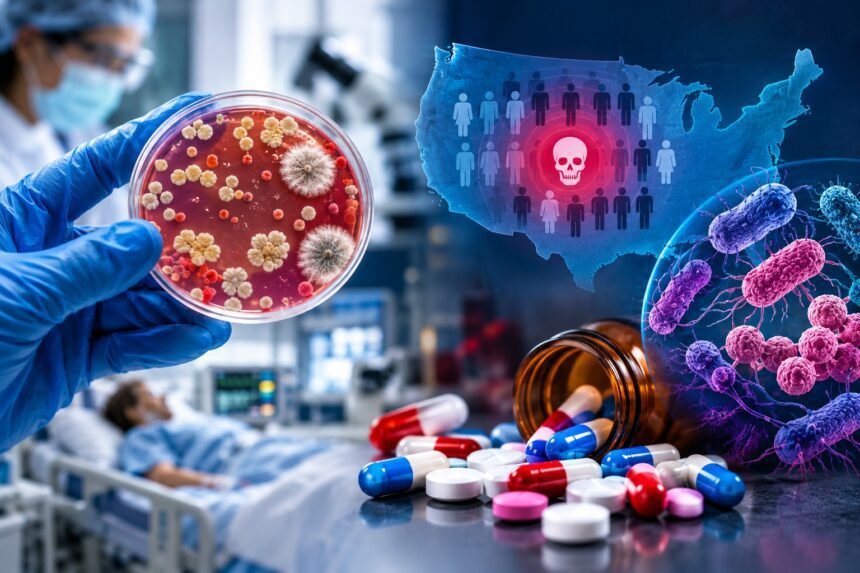
WASHINGTON: Drug-resistant bacteria and fungi are causing an estimated 9.7 million infections and 50,800 deaths annually in the United States, according to a new report from the Centers for Disease Control and Prevention (CDC).

The report, released in October 2026, highlights the growing threat of antimicrobial resistance, a condition in which bacteria and fungi develop the ability to survive medicines designed to kill them. As a result, infections can become harder to treat, leaving doctors with fewer effective treatment options.

The CDC identified 19 bacterial and fungal pathogens that pose different levels of risk to public health. Four were classified as urgent threats, 13 as serious threats and two as concerning threats. The agency is also monitoring six additional pathogens whose full impact is not yet understood.

Among the most concerning threats is *Candida auris*, a fungus that can cause serious infections, particularly among patients in hospitals and nursing homes. Cases have increased significantly in recent years, and some strains are resistant to multiple antifungal medicines.

Other major threats include bacteria resistant to carbapenems, a class of antibiotics often used to treat severe infections, as well as drug-resistant gonorrhoea. The CDC has also classified drug-resistant meningococcal bacteria as a serious threat because they can cause meningitis and bloodstream infections.

Antimicrobial resistance can make routine medical care more dangerous. Patients may experience longer hospital stays, higher treatment costs and an increased risk of life-threatening complications. Infections associated with healthcare settings accounted for more than 42,000 deaths and nearly $12 billion in healthcare costs in 2023, according to the report.

However, the findings also show that prevention efforts can make a difference. The CDC reported progress against *Clostridioides difficile*, commonly known as C. diff, with infection rates falling between 2018 and 2020 and remaining stable afterward. Although C. diff is not typically drug-resistant, it is included in the report because antibiotic use and the spread of germs contribute to its risk.

Health officials recommend using antibiotics and antifungal medicines only when prescribed by a qualified healthcare professional. Antibiotics do not treat viral illnesses such as colds and flu, and unnecessary use can contribute to resistance.

Regular handwashing, keeping wounds clean, staying up to date with recommended vaccinations and following infection-control guidance can also help prevent infections.

The CDC warns that tackling drug resistance will require responsible medicine use, stronger infection prevention and continued monitoring of dangerous pathogens.

Share This Article
Email Copy Link Print
Previous Article Apple Offers Replacements for iPhone Duo Screen Problems
Next Article WHO Advances New TB Treatment Options as Mpox Vaccine Donations Increase
Leave a Comment

Leave a Reply Cancel reply

Your email address will not be published. Required fields are marked *

Sponsored Ads

Stay Connected

FacebookLike
XFollow
InstagramFollow
YoutubeSubscribe
WhatsAppFollow
ThreadsFollow
Pakistanis May Face Higher Electricity Bills in Coming Months
Economy
October 30, 2026
Tax Return Deadline Tomorrow: FBR Warns of Penalties and Data-Driven Audits
Economy
October 30, 2026
Djokovic Faces ATP Finals Battle After Loss in Basel
Sports
October 30, 2026
Another Toll of the Violent Unrest in France: The Political Center
international
October 30, 2026
Binance Hit by $6.3 Billion Crypto Hack What Happened?
Economy
October 30, 2026
AI’s Biggest Challenge Is Electricity But Who Will Pay the Bill?
Technology
October 30, 2026

You Might Also Like

Hantavirus at Sea: Why Suing a Cruise Line Is Harder Than You Think
Health

Hantavirus at Sea: Why Suing a Cruise Line Is Harder Than You Think

By
Misbah Jogyat
Health

Breakthrough in Experimental Hepatitis C Drug

By
Neha Ashraf
Why Do Pimples Appear on Your Skin? The Science Behind Acne
BlogHealth

Why Do Pimples Appear on Your Skin? The Science Behind Acne

By
Misbah Jogyat
NICVD, Hassan Suleman Memorial Hospital Sign 20-Year Partnership to Expand Cardiac Care in Malir
Health

NICVD, Hassan Suleman Memorial Hospital Sign 20-Year Partnership to Expand Cardiac Care in Malir

By
Misbah Jogyat
Media Hyde Media Hyde Dark
Facebook Twitter Youtube Rss Medium

About US

Media Hyde Network: Your instant connection to breaking stories and live updates. Stay informed with our real-time coverage across politics, tech, entertainment, and more. Your reliable source for 24/7 News.

Top Categories
  • Headline
  • Politics
  • Entertainment
  • Education
  • Sports
  • Religious
  • Metropolitan
  • Climate and Weather
Usefull Links
  • Contact Us
  • Disclaimer
  • Privacy Policy
  • Cookies Policy
  • Advertising Policy
  • Terms & Conditions

© 2025 Media Hyde Network. All Rights Reserved.

Welcome Back!

Sign in to your account

Username or Email Address
Password

Lost your password?