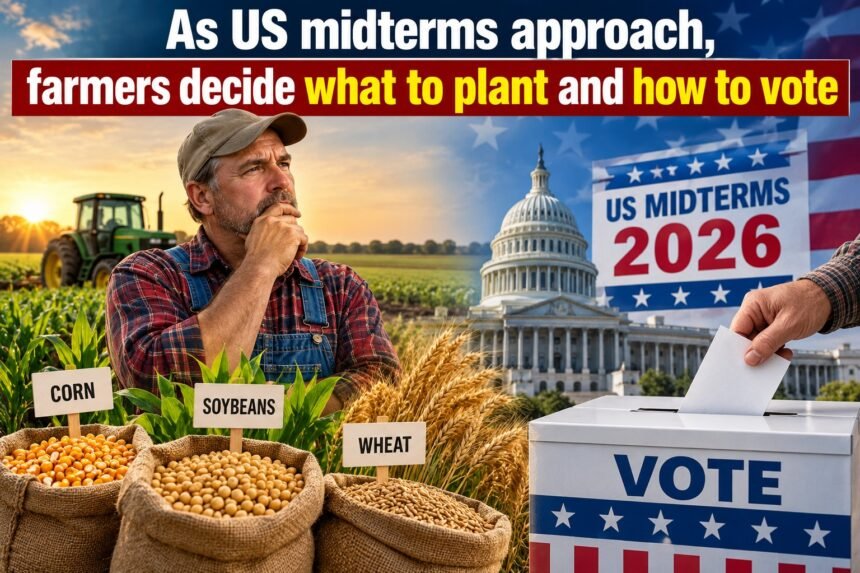
WASHINGTON: As the United States approaches its midterm elections, farmers across the country are weighing crucial decisions about what crops to plant while also considering how economic conditions and government policies may influence their votes.
Rising production costs, fluctuating crop prices, trade policies and uncertainty over agricultural support programs are among the issues shaping farmers’ decisions. Many growers must determine which crops are likely to provide the best returns while managing expenses for seeds, fertilizers, fuel and machinery.
Farmers’ political choices are also influenced by concerns about their livelihoods, access to markets and the direction of agricultural policy. For rural communities, election issues often extend beyond farming to include healthcare, infrastructure, immigration and the broader cost of living.
In Arkansas, farmer Paul McKinney is shifting from rice to soybeans because soybeans are less expensive to produce. Rising fertilizer and diesel prices have added to the financial pressure on agricultural businesses. The economic challenges have also prompted some farmers to reconsider their political choices. Democratic Senate candidate Hallie Shoffner, a sixth-generation farmer from Arkansas, has made rising agricultural costs and trade policy central issues in her campaign against Republican Senator Tom Cotton. However, analysts caution that financial difficulties do not automatically translate into changes in voting behavior. Party loyalty, campaign resources and local concerns will also influence the outcome.
The US midterm elections are scheduled for November 3, 2026. The results will determine control of Congress and could shape future decisions on trade, energy, agricultural assistance and economic policy.