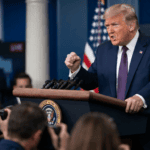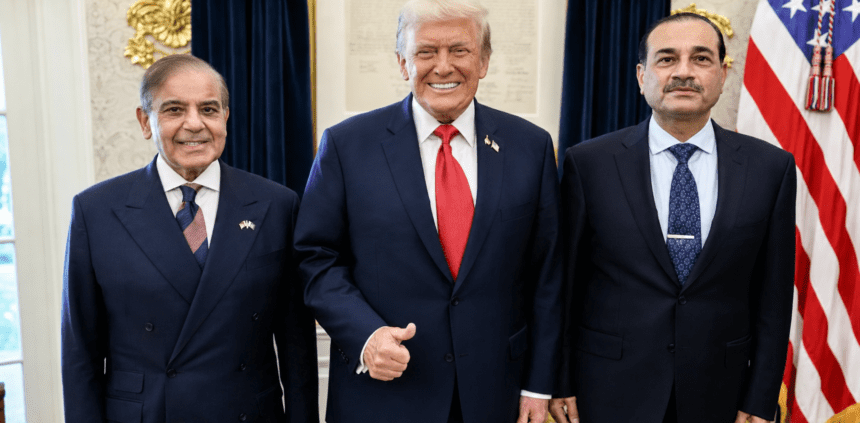
U.S. President Donald Trump has once again publicly praised Pakistan’s civilian and military leadership, with the latest round of remarks coming as Islamabad tries to position itself as a go-between in contacts involving Washington and Tehran. Recent Pakistani and regional coverage says Trump commended Prime Minister Shehbaz Sharif and Field Marshal Asim Munir for Pakistan’s role in facilitating diplomacy linked to the U.S.-Iran track. Pakistani official channels have also highlighted Islamabad’s continued push for a negotiated outcome.
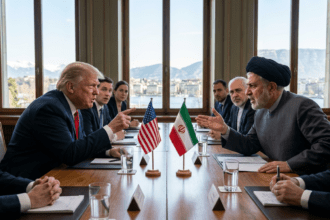
The story matters because it didn’t appear out of nowhere. Pakistan’s Prime Minister’s Office has already documented high-level activity around the so-called Islamabad talks in April 2026, including Shehbaz Sharif’s meeting with U.S. Vice President JD Vance on April 11, 2026, alongside meetings with Iranian representatives. That gives the headline a broader diplomatic frame: Pakistan is presenting itself not just as an observer, but as an active intermediary in a tense regional file.
There is also earlier precedent for Trump’s warm tone toward Pakistan’s leadership. The White House and Pakistan’s PM Office both carry material from a September 26, 2025 meeting in Washington involving Trump, Shehbaz Sharif, and Asim Munir, showing that direct top-level contact between the two sides is already on record. That background helps explain why Trump’s newer comments are being read in Islamabad as part of a continuing thaw, not a one-off compliment.
At the same time, the broader diplomatic environment remains fluid. Reporting this week says Pakistan has been relaying messages between the United States and Iran, but Iranian officials have also indicated that no final decision has yet been made on the U.S. outreach. In other words, the praise is politically notable, but the underlying negotiations still look fragile and unfinished.
Pakistani officials have leaned into the moment. State-linked and local reporting has presented Trump’s remarks as proof that Pakistan’s regional standing has risen, especially after Islamabad sought an extension of a ceasefire window to keep diplomacy alive. That framing is clearly meant for both foreign and domestic audiences: abroad, it casts Pakistan as useful; at home, it sells the leadership as globally relevant at a difficult time for the region.
Still, a note of caution is fair. Much of the language around Trump “again appreciating” Pakistan’s top leadership has been amplified first through Pakistani and South Asian media reports rather than a single detailed U.S. government readout. The safest reading, based on the available material, is that Trump has repeatedly used positive language about Shehbaz Sharif and Asim Munir while Pakistan tries to capitalize on its mediator role in the U.S.-Iran channel.