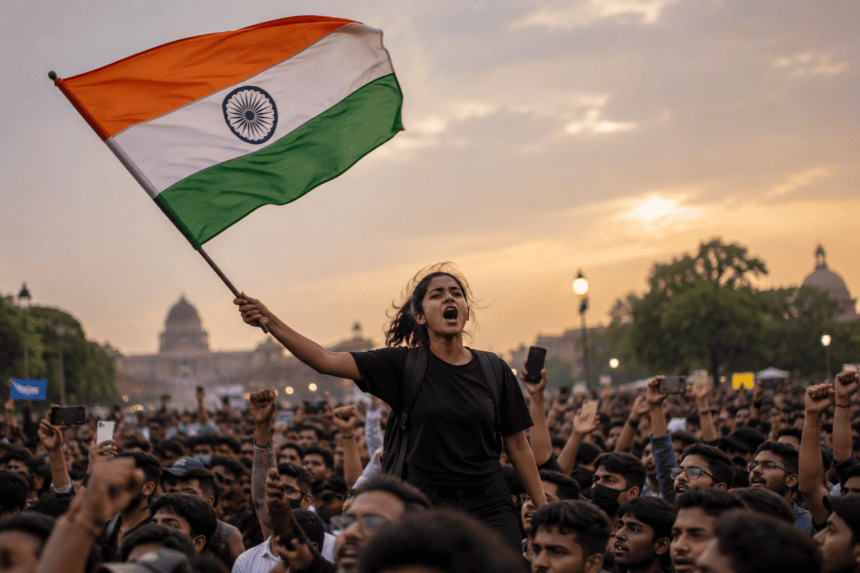
A lone student standing before a phalanx of riot police, clutching a copy of the Constitution while tear gas canisters hiss in the background. It is an image that has gone viral, not because it is polished, but because it feels inevitable. In the current climate of Indian protests—from campus uprisings to nationwide demonstrations against legislative shifts—this specific visual shorthand has become the defining brand of Gen Z activism.
The image isn’t just about the physical confrontation. It marks a departure from the protest styles of previous generations. Where older activists relied on structured unions or long-standing political party affiliations, this cohort operates in a decentralized, digital-first ecosystem. They don’t wait for permission from a party high command to hit the streets. They coordinate via encrypted messaging apps, live-stream the police response, and turn the resulting footage into a weapon of public opinion.
The “so what” is immediate: the state is losing its monopoly on the narrative. In the past, the authorities dictated the framing of a protest through official press briefings. Now, the protest is documented in real-time by the participants themselves. When a student captures a video of a detention, that clip reaches millions before the police can file a single report. It forces the establishment to react to a digital reality they cannot control or easily spin.
Critics often label this style as performative, but the physical risks tell a different story. These students are facing water cannons, arbitrary detentions, and the long-term threat of blacklisting from government jobs or academic institutions. The stakes are personal, and the commitment is visceral. They aren’t just holding signs; they are testing the limits of what a democracy can tolerate from its youngest, most educated citizens.
The symbols they choose are deliberate. By invoking the Constitution—often carrying physical copies as shields—they are grounding their defiance in the law itself. It creates a powerful juxtaposition: the state claiming to protect the nation while using force against the very document that defines it. It is a calculated move that resonates with a tech-savvy audience who value authenticity over the rhetoric of career politicians.
This shift has left traditional political parties scrambling. They find themselves trailing behind the youth, trying to co-opt movements they didn’t start and don’t quite understand. The political establishment is accustomed to bargaining with leaders, but this movement has no single head to cut off. It is a hydra of hashtags and impromptu rallies that appear in city centers overnight and vanish just as quickly.
As the protests continue to ripple across universities and urban hubs, the image remains the most potent tool in their arsenal. It captures a generation that has realized the internet is not just for consumption, but for mobilization. Whether these protests lead to concrete policy changes or simply a shift in the national conversation remains to be seen. But the visual record is already set: the state may have the armor, but the students have the lens.