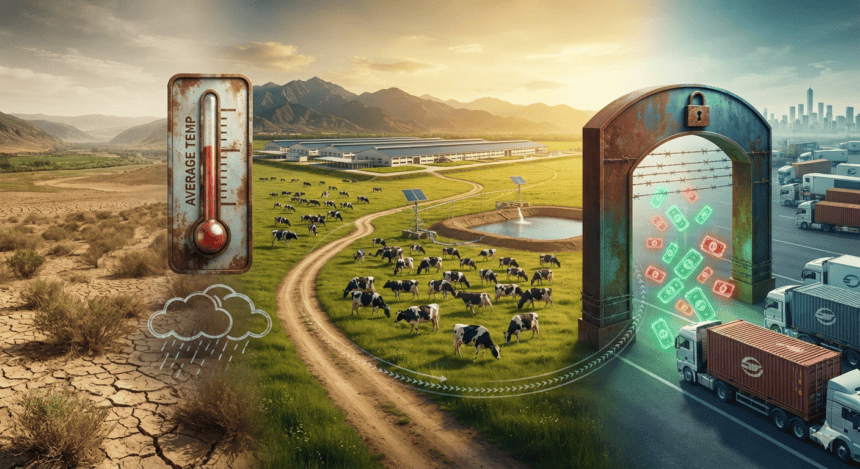
China is aggressively expanding its domestic cattle herds, a strategic pivot driven by shifting climate patterns and the high cost of imported beef. As trade tensions influence global supply chains, Beijing is betting on its northern grasslands to secure long-term food sovereignty.
The transformation is most visible in the Inner Mongolia autonomous region. Where once fragile ecosystems struggled under traditional grazing, new, state-backed industrial farming models are taking over. These facilities rely on precision irrigation and drought-resistant feed crops, mitigating the impact of increasingly erratic rainfall that has historically plagued the region’s pastoralists.
Trade policy is the secondary engine behind this growth. Heavy tariffs on beef imports from major Western suppliers—a recurring feature in Beijing’s geopolitical playbook—have made domestic production more economically viable. By tightening the borders on foreign meat, the state has created a price floor that protects local producers, encouraging massive capital injection into large-scale feedlots.
The environmental cost, however, remains a point of friction. Intensive cattle farming in a region already sensitive to desertification requires massive water resources. While the government promotes these projects as “modernized agriculture,” independent researchers warn that the scale of current expansion risks exhausting regional aquifers.
“We are seeing a fundamental shift in how the state views protein security,” said an agricultural policy analyst familiar with the sector. “It’s no longer just about buying from the cheapest source. It’s about building a fortress around the supply chain, regardless of the environmental trade-offs.”
This push is already affecting global markets. Australia and Brazil, historically China’s primary beef suppliers, are watching closely as Chinese production numbers climb. If Beijing succeeds in meeting a larger share of its domestic demand, the global export market will face a significant supply surplus, likely depressing prices for other international buyers.
For now, the expansion continues at a rapid clip. As climate-controlled mega-farms replace traditional open-range grazing, China is signaling that it intends to stop being the world’s largest beef importer and start becoming a self-sufficient powerhouse. Whether the land can sustain such intensity is a question Beijing is gambling it can answer through technology.