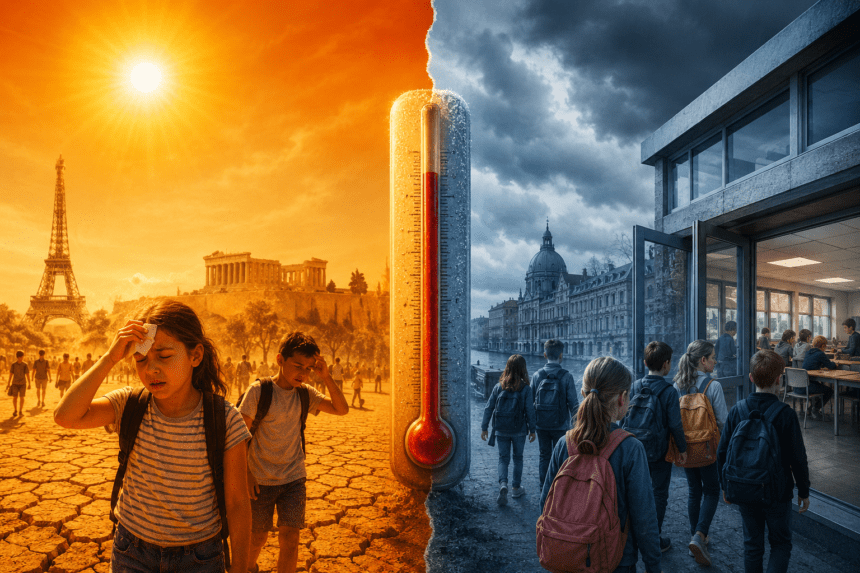
Europe’s latest heatwave is forcing a collision between academic schedules and public safety. As temperatures climb past 40°C (104°F) in parts of the continent, parents, unions, and government officials are locked in a standoff over whether to keep classrooms open or pull the plug on the school year.
In Southern Europe, where school infrastructure often lacks modern air conditioning, the crisis is immediate. Teachers in Greece and Italy report classroom temperatures hitting levels that make concentration impossible. Public health experts warn that the risk of heat exhaustion for students is no longer theoretical, yet many education ministries are resisting widespread closures.
The divide is sharp. Education ministers argue that after years of pandemic-related disruptions, losing more days is a cost the system cannot afford. They point to the “learning gap” and the logistical nightmare of finding childcare on short notice for working parents.
“We are balancing the educational calendar against the reality of a changing climate,” a spokesperson for the Greek Ministry of Education told reporters on Monday. The ministry has opted for localized decisions, leaving mayors to decide if specific schools should shut down rather than issuing a blanket order.
Parents aren’t buying the logic. In Rome, advocacy groups are pushing for a formal shift in the academic calendar, arguing that mid-June heat in a non-ventilated classroom is a health hazard, not an educational environment.
“My son came home yesterday with a migraine and heat rash,” says Elena Rossi, a mother of two in Rome. “They aren’t learning anything when they are sitting there fanning themselves with notebooks. They are just surviving the day.”
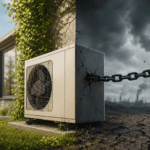
The data supports the concern. Studies from the European Environment Agency show that extreme heat events are occurring with higher frequency and intensity, yet school building retrofits remain slow. Most structures across the Mediterranean were built for thermal retention—keeping heat in during winters—not for the blistering summers currently gripping the region.
The conflict highlights a broader failure in public policy. While governments issue heat alerts and advise the elderly to stay indoors, children remain tethered to the rigid, century-old structure of the school calendar.
For now, the policy remains a patchwork of regional mandates. Some schools have slashed hours, ending classes at midday to avoid the peak heat, while others have moved to “remote learning” models—a pivot that feels uncomfortably familiar to many families.
As the mercury continues to rise, the question isn’t just about finishing the curriculum. It’s about who bears the risk when the environment outpaces the infrastructure. Until governments commit to the massive costs of retrofitting these classrooms, the debate will repeat itself every June.