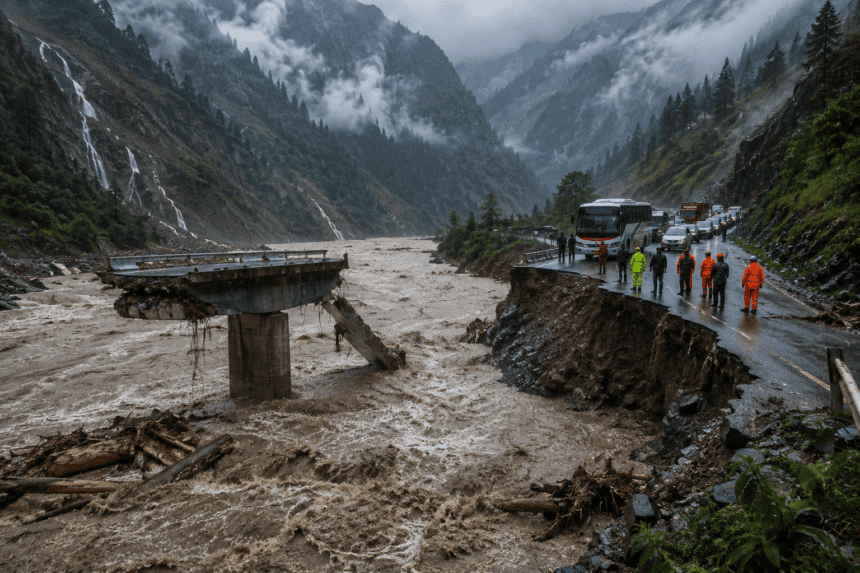
Torrential rains have paralyzed Gilgit-Baltistan, washing away vital road networks and bridges while trapping hundreds of travelers in the mountainous terrain. The deluge, which began late Tuesday, has triggered flash floods and landslides that have effectively cut off major arteries, including sections of the Karakoram Highway.
The damage is most severe in the Shigar and Skardu districts, where local authorities confirm that at least four key bridges have been swept away. In the Gultari valley, rising water levels have inundated dozens of homes, forcing families to abandon their belongings and retreat to higher ground.
For the thousands of tourists currently visiting the region, the situation is increasingly desperate. With roads blocked by massive boulders and mud, supply chains have stalled. Fuel stations are running dry, and food prices in local markets have surged as transporters struggle to reach the northern hubs.
“We are trapped,” said a local hotel owner in Skardu. “The road ahead is gone, and the road behind is buried under a landslide. We have no way to move people or supplies.”
The Gilgit-Baltistan Disaster Management Authority (GBDMA) has struggled to deploy heavy machinery. The sheer scale of the debris makes clearing the routes a slow, dangerous task. Officials warn that the weather remains unstable, with more rain expected over the next 48 hours, which could trigger further slope failures in already saturated areas.
This crisis follows a summer of record-breaking heat in the region, which experts suggest has accelerated glacial melt, leaving the soil loose and highly susceptible to flash flooding. While previous years saw seasonal monsoon impacts, the intensity of this week’s rainfall has caught local infrastructure off guard.
For now, the focus remains on search and rescue operations in the hardest-hit villages. As the rain continues to lash the valleys, the prospect of reopening major transit routes remains dim, leaving the region isolated until the skies clear.