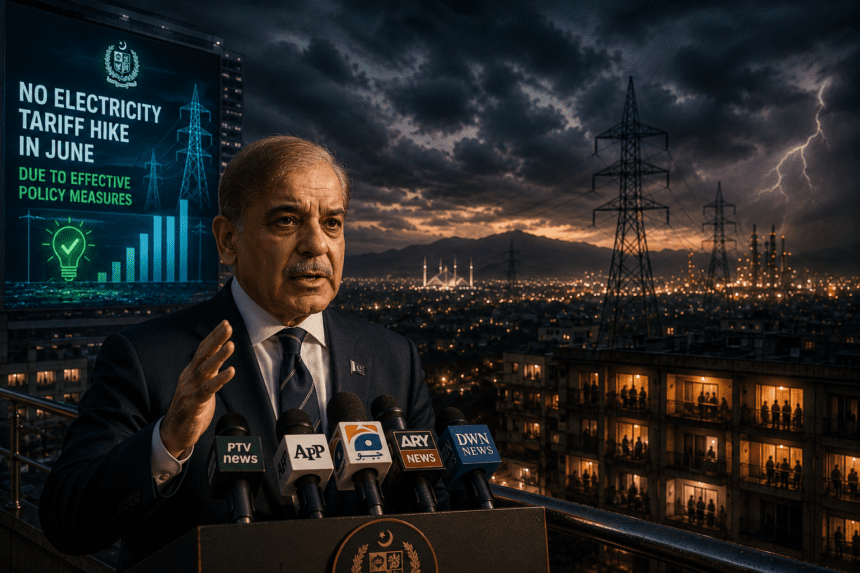
The government will keep electricity tariffs unchanged for June, a move officials attribute to “effective policy measures” rather than a broader shift in energy pricing. The decision provides a temporary reprieve for consumers already struggling with high utility bills, though the underlying structural issues in the power sector remain unaddressed.
Power Division officials confirmed the freeze Tuesday, stating that targeted interventions in the supply chain and improved bill collection rates helped bridge the gap without shifting the burden to the public. For months, the sector has faced immense pressure from international lenders to hike rates to recover mounting circular debt. This pause suggests a shift in tactics, focusing on administrative efficiency rather than direct consumer taxation.
The “policy measures” cited by the government include a crackdown on electricity theft and the renegotiation of certain generation contracts. While these steps have yielded short-term cash flow improvements, energy analysts warn that the relief may be short-lived. The state’s circular debt—now exceeding Rs 2.6 trillion—continues to accumulate, largely fueled by capacity payments to independent power producers.
Critics argue that freezing rates without addressing the high cost of generation is merely a stopgap. “You can’t solve a structural deficit with administrative tweaks,” one former energy ministry advisor said. “The pressure will return in July when the next fiscal review begins.”
Despite the skepticism, the move offers immediate relief to households. With inflation still hovering in double digits, any increase in energy costs would have triggered widespread public pushback.
Whether the government can sustain this fiscal discipline through the next quarter remains the central question. For now, the power sector is holding the line, banking on the hope that tighter enforcement can replace the need for further price hikes.