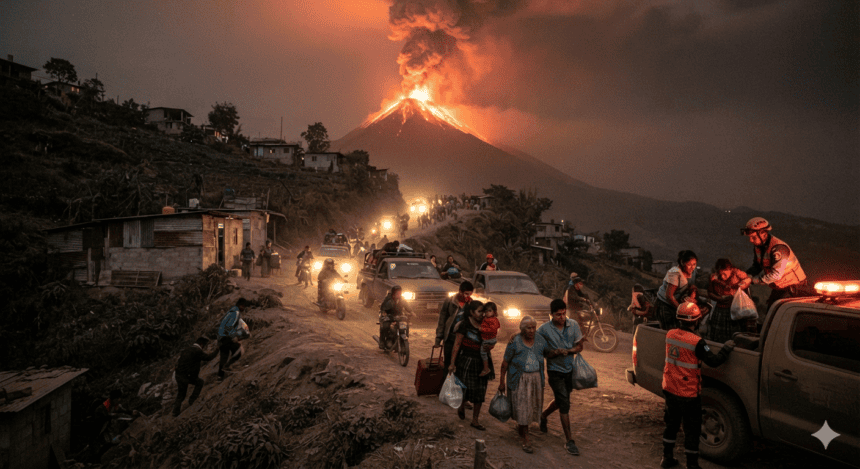
The Fuego volcano, located just 35 kilometers from Guatemala City, erupted Thursday, sending plumes of ash and volcanic material thousands of meters into the sky. Authorities have ordered immediate evacuations for communities situated along the volcano’s southern flank, as heavy ashfall threatens to blanket nearby villages.
Disaster management agency CONRED confirmed the onset of pyroclastic flows—fast-moving currents of hot gas and rock—descending the mountain’s slopes. Emergency sirens sounded across the Escuintla and Sacatepéquez departments early this morning, forcing families to abandon homes and livestock.
This eruption marks a volatile turn for one of Central America’s most active volcanoes. While Fuego frequently exhibits moderate activity, today’s sustained explosions have triggered a higher-level alert. Ash is currently drifting toward the capital, forcing aviation authorities to issue warnings for regional flight paths.
“The situation is fluid,” said a local emergency responder on the ground. “We are prioritizing the removal of families in the direct path of the debris flows, but the wind direction is spreading the ash much further than we initially projected.”
The 3,763-meter peak has a history of deadly activity. In 2018, a massive eruption buried the village of San Miguel Los Lotes, killing nearly 200 people and leaving hundreds more missing. That tragedy shifted the government’s approach to monitoring; today’s evacuations began hours before the most intense tremors peaked.
Field teams are currently monitoring seismic sensors and thermal cameras to determine if the eruption will intensify or subside by nightfall. For now, the focus remains on clearing the “red zones” before the ash makes travel impossible.
As the sun sets over the volcanic range, thousands wait in temporary shelters. The primary concern isn’t just the immediate eruption, but the potential for heavy rains to mix with fresh volcanic ash, creating dangerous mudslides known as lahars in the coming days.