REYKJAVIK — The Icelandic parliament has narrowly voted to restart negotiations for European Union membership, a move that has reignited a decade-old divide in the country. The decision, passed late Tuesday, forces the government to face a reality it largely hoped to leave buried: a contentious path toward Brussels that remains deeply unpopular with many voters.
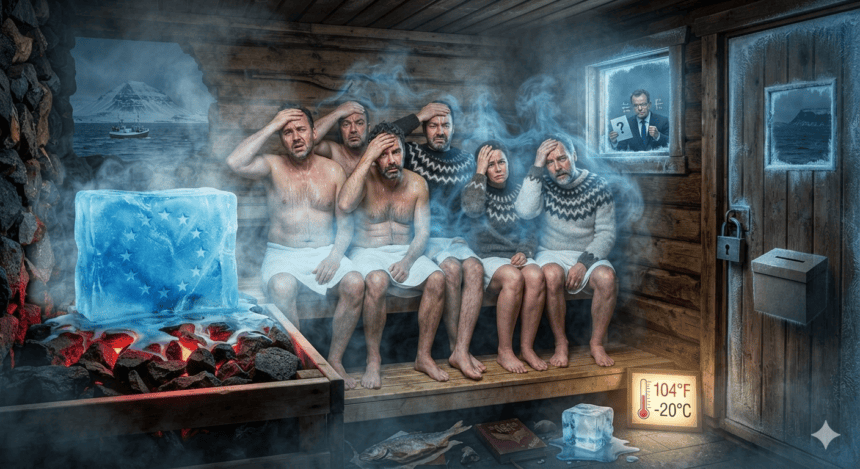
Proponents of the motion argue that the EU provides a necessary economic anchor for the North Atlantic nation, especially as the fishing industry faces shifting global trade dynamics. Yet, the opposition is vocal and entrenched. The “Sauna” analogy—a common refrain in local media—captures the prevailing sentiment: the process is stifling, intrusive, and increasingly uncomfortable for a population that prizes its sovereignty above all else.
The vote passed with a slim margin, reflecting a fractured political landscape. Prime Minister Bjarni Benediktsson has long maintained that Iceland’s interests are better served by the European Economic Area (EEA) agreement, which provides access to the single market without the political baggage of full accession.
“We are entering a process that lacks public mandate,” Benediktsson said during the heated debate. He signaled that while the parliament has spoken, the executive branch remains unconvinced that membership is a viable or desired outcome for the Icelandic public.
Critics of the restart point to the 2013 collapse of previous talks as a cautionary tale. That attempt ended in a humiliating withdrawal after the government realized it could never reconcile the EU’s Common Fisheries Policy with Iceland’s domestic fishing quotas. The industry is the backbone of the economy, and any threat to its autonomy is viewed as a non-starter.
Adding to the complexity, the timing of this vote coincides with rising inflation and interest rate pressures. Pro-EU factions believe that adopting the Euro would stabilize the volatile Icelandic Króna. Economists, however, are split. Some argue the transition would invite foreign regulation into sectors that currently operate on local, nimble decision-making.
The path forward is far from certain. Even if formal negotiations resume, they require a level of bureaucratic alignment that Iceland has historically resisted. For now, the government is tasked with drafting a formal request to Brussels, but the political temperature in Reykjavik shows no sign of cooling.
The divide isn’t just about trade or currency; it’s about the identity of an island nation that has spent decades balancing European integration with fierce independence. As the government prepares its next move, it faces a public that remains largely skeptical—and a parliament that is, for the moment, sharply at odds with itself.