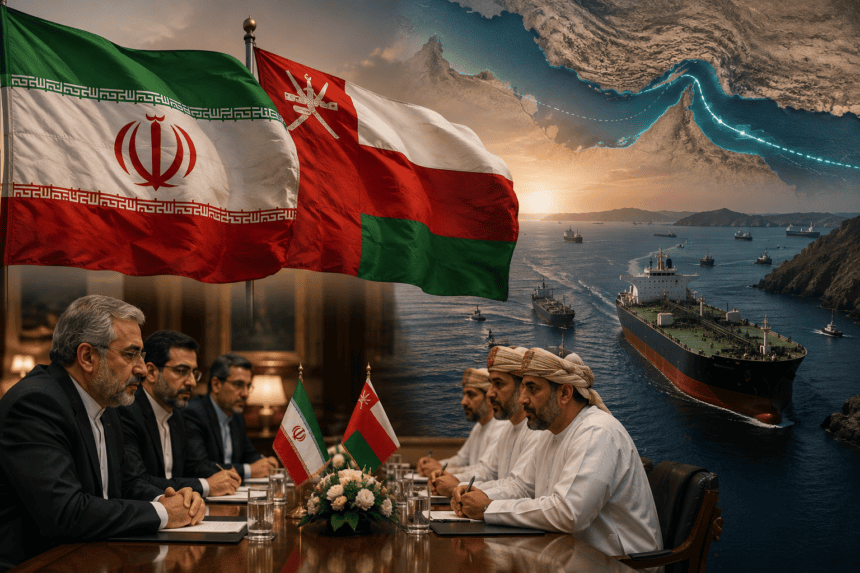
Tehran and Muscat are quietly pressing ahead with negotiations to formalize a security framework for the Strait of Hormuz. Despite regional volatility and shifting maritime alliances, a senior Iranian official confirmed that the dialogue remains active, aimed at insulating one of the world’s most critical energy corridors from escalating geopolitical friction.
The talks focus on creating a localized security mechanism that minimizes the footprint of extra-regional powers. For Tehran, the goal is clear: asserting that littoral states possess the sole legitimacy to police these waters. Oman, maintaining its long-standing role as the region’s primary diplomatic bridge, continues to facilitate these discussions, seeking to prevent accidental naval skirmishes that could trigger a broader conflict.
The Strait serves as the artery for roughly 20% of the world’s daily oil consumption. Even minor disruptions here ripple instantly through global markets, spiking insurance premiums and threatening the stability of energy supplies from the Persian Gulf to Asia and Europe.
While Western naval coalitions, including the U.S.-led International Maritime Security Construct, have historically patrolled these lanes, Iran has consistently viewed such presence as an encroachment. The current push for an Iran-Oman accord suggests an attempt by Tehran to secure a regional “gentleman’s agreement” that could eventually render foreign naval patrols redundant.
Analysts familiar with the discussions note that progress remains deliberate rather than rapid. The challenge lies in reconciling Iran’s hardline stance on maritime sovereignty with the security concerns of neighboring Arab states, who remain wary of Tehran’s regional ambitions.
Whether this bilateral effort can survive the current climate of heightened tensions in the Middle East is the question. For now, the quiet channel between Tehran and Muscat persists — a vital, if fragile, attempt to keep the world’s most sensitive maritime chokepoint from boiling over.