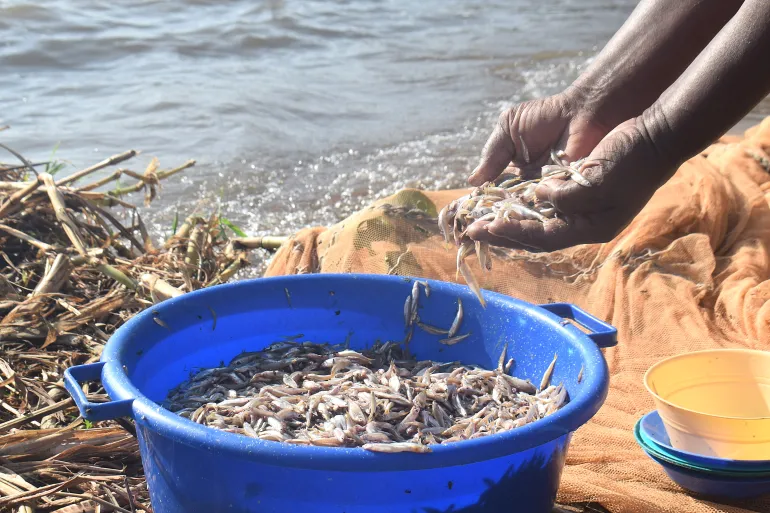
KAGWEL, Kenya — On the shores of Lake Victoria in western Kenya, women in some fishing communities are entering a trade long restricted to men, as falling incomes, declining fish catches and climate pressures reshape livelihoods.
In Kagwel village in Kisumu County, the shift is reflected in the experience of Rhoda Ongoche Akech, who began fishing in the early 2000s despite social stigma. Traditionally, women were involved in buying and selling fish rather than catching them, but reduced earnings from trade have pushed some to take up fishing directly.
Cultural restrictions in parts of the region discouraged women from entering the lake, with beliefs that their presence could affect fishing outcomes. Community elders say such norms shaped local practices for generations, including certain restrictions on men before fishing trips. However, economic pressures are weakening these traditions.
Environmental stress has added to the challenge. WorldFish reports that fisheries in Lake Victoria have experienced significant ecological disruption linked to both climate and non-climate factors. Long-term data from 1981 to 2022 shows rising temperatures and changing rainfall patterns, contributing to declining fish stocks, infrastructure damage, increased disease risks and reduced household incomes.
The lake supports livelihoods across the region. According to Food and Agriculture Organization, about 200,000 fishers operate across Kenya, Tanzania and Uganda, while more than 50 million people depend directly or indirectly on the lake for food and income.
At the same time, Lake Victoria faces multiple pressures, including overfishing, pollution, invasive species and climate change. The United Nations Environment Programme has warned that declining water quality and availability are increasing the vulnerability of communities dependent on the lake.
For women, entering fishing can provide greater income opportunities and increased control over household finances, but it also exposes them to risks traditionally faced by men. WorldFish notes that climate impacts in Kenya’s lake regions are not gender-neutral, with women and youth often facing additional barriers due to social norms and limited access to resources.
As fish catches become less predictable and trading incomes decline, some women are turning to fishing as an economic necessity. Researchers and aid groups say strengthening local resilience will require measures such as improved climate information services, better fish preservation, reduced post-harvest losses and more inclusive fisheries policies.