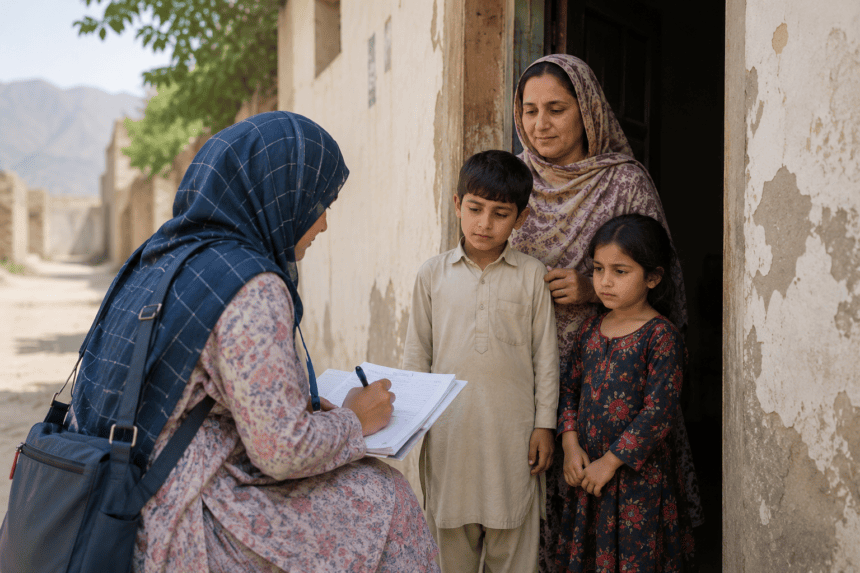
The Khyber Pakhtunkhwa government has launched a door-to-door survey to identify children who are currently out of school, marking an effort to obtain more accurate information about children who are not participating in formal education.
The initiative focuses on going directly into communities and households instead of relying only on existing school records. Field teams can identify children who have never enrolled, children who dropped out and those who may have difficulty accessing educational institutions.
Why a Door-to-Door Survey Is Important
One of the biggest challenges in addressing out-of-school children is knowing exactly who they are, where they live and why they are not attending school.
Government school records can identify enrolled students, but they cannot always provide a complete picture of children who are outside the education system.
A household survey can help authorities identify these children directly.
Field workers can collect information about children’s ages, education status, family circumstances and possible barriers preventing them from attending school.
Identifying the Reasons Behind School Dropout
Children leave school for many different reasons.
Some families face financial difficulties and cannot afford education-related expenses. Others may live far from schools or have limited access to transportation.
In some communities, children may leave school to work, help their families or take on household responsibilities.
Girls can face additional barriers related to distance, safety, availability of girls’ schools and social expectations.
A door-to-door survey can help policymakers understand these differences instead of treating all out-of-school children as one group.
From Data to Action
Collecting information is only the first step.
The real value of the survey will come from using the data to develop targeted education programmes. Once authorities know where out-of-school children are concentrated, they can determine where additional schools, classrooms, teachers, transport facilities or financial support may be required.
The information can also help education departments identify communities with particularly high dropout rates.
Bringing Children Back Into Education
The ultimate objective of such a survey is to help bring children back into education.
Authorities can potentially use the information to connect families with nearby government schools and identify children who need additional assistance.
For children who have been away from education for a long period, special programmes may also be required to help them return to learning.
A Wider Education Challenge
The issue of out-of-school children is not limited to one province. Pakistan has faced a major education-access challenge for years, particularly in areas where poverty, distance and limited educational infrastructure affect school attendance.
A reliable household-level database can therefore be valuable for planning.
Instead of estimating the size of the problem, authorities can use verified information from communities to decide where resources are most urgently needed.
The Bigger Goal
The KP survey represents an important step toward understanding the education gap at the household level.
If the collected data are accurately recorded and followed by practical interventions, the initiative could help education authorities locate children who have been missed by the formal school system and develop strategies to bring them back into classrooms.