A rapidly spreading measles outbreak is claiming lives across Bangladesh, as health authorities struggle to contain the virus in remote and densely populated regions. Local hospitals report that the death toll has climbed steadily over the past two weeks, with children under five bearing the brunt of the crisis.
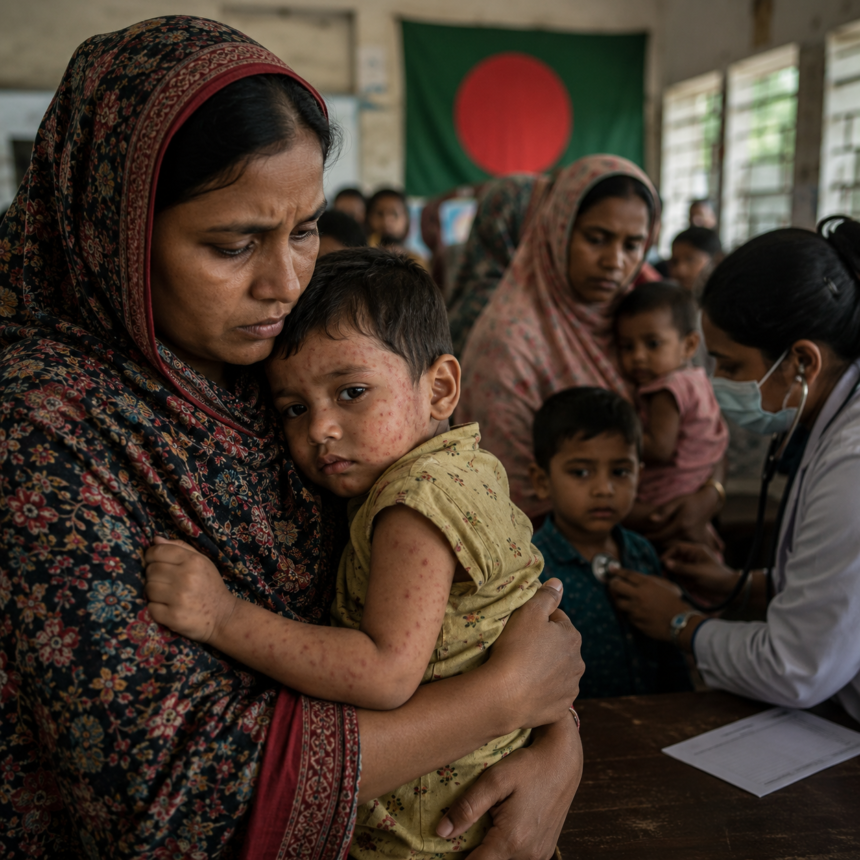
The surge, concentrated in areas with low vaccination coverage, has overwhelmed local clinics. In rural districts, parents are arriving at makeshift wards with children suffering from high fevers and respiratory distress, only to find limited supplies of oxygen and essential medication. “We are seeing cases we haven’t seen in years,” said a senior physician at a district hospital in the northern region.
“The wards are full, and for many of these children, they’re arriving too late.” Public health experts point to a significant gap in routine immunization programs, exacerbated by recent climate disruptions that have hampered the delivery of vaccines. While the government has launched emergency vaccination drives, logistical hurdles including damaged infrastructure from recent flooding—have stalled efforts to reach the most vulnerable communities.
The World Health Organization (WHO) has flagged the outbreak as a “critical concern,” urging local officials to prioritize mobile clinics. However, health workers on the ground describe a more immediate challenge: vaccine hesitancy fueled by misinformation and a lack of access to reliable medical facilities.
For families in these regions, the crisis is personal. Many are traveling for hours by boat or on foot to reach treatment centers, only to face long wait times.
The government’s response remains under scrutiny as the number of infections continues to rise. Officials maintain that additional vaccine stocks have been dispatched to the affected districts, but the reality on the ground suggests that the current supply is failing to keep pace with the spread. Until the vaccination gaps are bridged, the death toll will likely continue to climb.
For now, the focus remains on stabilizing the most critical cases, though local doctors fear the worst is yet to come.