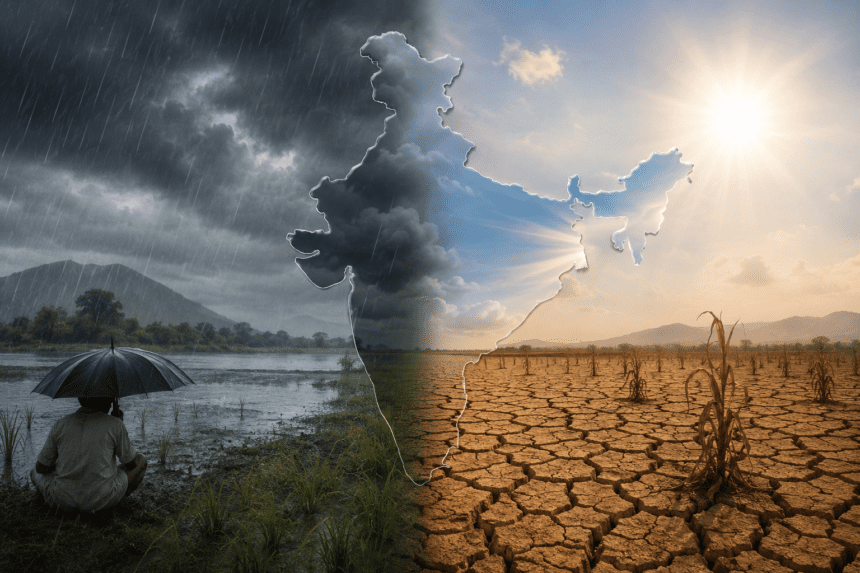
The Met Office has issued a sobering outlook for the 2026 monsoon season, predicting rainfall levels will fall below the long-term average. This forecast arrives as a blow to agricultural planners and water management authorities already bracing for potential supply constraints.
The seasonal outlook indicates that moisture-bearing winds from the Arabian Sea and the Bay of Bengal are likely to remain subdued. Meteorologists point to shifting sea-surface temperatures in the Pacific—a phenomenon that typically disrupts the standard pressure gradients required to pull heavy monsoon rains across the subcontinent.
For farmers, the stakes are immediate. Crops like rice, cotton, and sugarcane depend heavily on the June-to-September window. A shortfall doesn’t just mean smaller yields; it translates to higher irrigation costs as farmers scramble to tap into depleting groundwater reserves.
Water managers are equally concerned. Major reservoirs, already struggling with variable inflows over the past two years, may not reach capacity. If the monsoon underperforms, the country faces a tighter grip on hydroelectric power generation and urban water rationing by early next year.
Climate scientists argue that this isn’t an isolated anomaly. The increasing frequency of “drier” monsoons fits a broader trend of climate volatility. While previous decades saw predictable, steady rains, the current pattern is defined by short, intense bursts followed by prolonged dry spells—a cycle that makes both flood management and drought relief increasingly difficult.
The Ministry of Climate Change has yet to release a formal contingency plan, but officials in provincial agriculture departments are already advising farmers to prioritize drought-resistant crop varieties.
The Met Office intends to provide localized updates every fortnight. Until then, the forecast remains a warning: the coming season will likely test the resilience of the country’s water infrastructure and its food security.