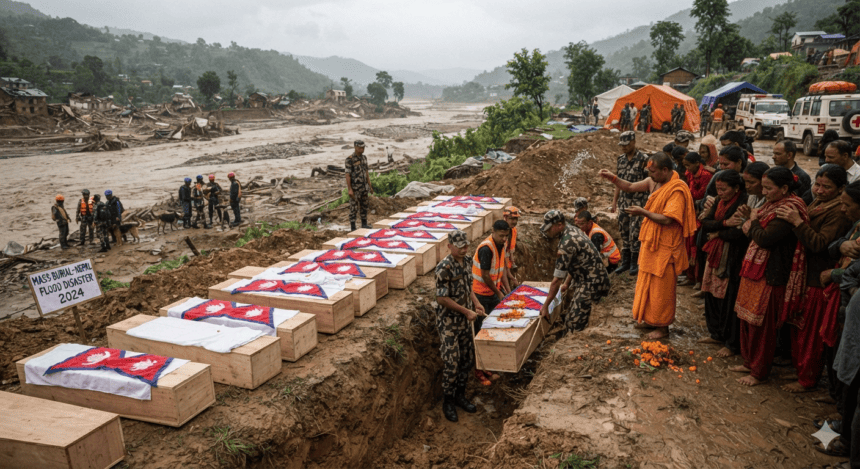
KATHMANDU — Authorities in Nepal have begun conducting mass burials for unidentified victims of last week’s catastrophic floods and landslides. With the death toll climbing past 240 and dozens still missing, rescue operations are transitioning into a grim recovery phase.
The decision follows a surge in bodies recovered from the muddy debris left behind by the heaviest rainfall in decades. Officials confirmed that hospitals in the Kathmandu Valley and surrounding districts are overwhelmed, lacking the cold-storage capacity to hold the influx of remains.
“We are running out of space and time,” a local disaster management official said. The government has directed forensic teams to collect DNA samples and dental records before burials, hoping these will allow families to identify their loved ones later.
For the families still waiting at riverbanks and makeshift camps, the mass burials offer a finality they aren’t ready to accept. Many continue to dig through the sludge with bare hands, searching for signs of missing relatives. The disaster, triggered by an intense low-pressure system, wiped out entire settlements, severed major highways, and destroyed critical bridges, leaving hundreds of communities isolated.
Search efforts remain hampered by unstable terrain and ongoing rainfall. Heavy machinery is struggling to clear the thick, viscous mud that buried homes in the southern plains. While the government has pledged relief funds and temporary housing, the scale of the destruction has left the administration scrambling.
Critics are already pointing to poor urban planning and the unchecked construction of roads in fragile mountain regions as primary reasons for the high casualty count. Meteorologists noted that while the intensity of the monsoon was extreme, the lack of early warning systems in remote areas turned a severe weather event into a national tragedy.
The recovery process is expected to take months. As the water recedes, the true extent of the economic damage—specifically to Nepal’s agricultural sector—will likely push the country’s already strained economy further toward the brink.
For now, the focus is on the dead. With no sign of the remaining missing, the authorities are preparing for more burials in the coming days.