A new scientific study has revealed fresh insights into the remarkable defense mechanisms of Ankylosaurus, one of the most heavily armored dinosaurs to have lived during the Late Cretaceous Period. The latest findings are helping paleontologists better understand how this prehistoric giant protected itself from some of the world’s largest predators nearly 66 to 68 million years ago.
Researchers examined fossil skeletons, armor plates, and the dinosaur’s famous tail club using 3D digital modeling, CT scanning, and biomechanical analysis. Their research suggests that Ankylosaurus possessed one of the most advanced natural defense systems among dinosaurs.
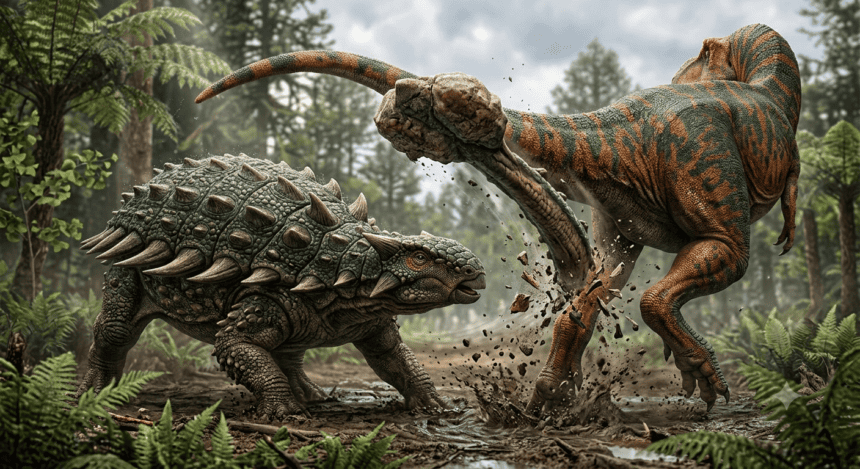
The dinosaur’s body was covered with thick bony armor plates, known as osteoderms, embedded within its skin. These protective plates acted like a natural shield, helping protect vital organs from attacks by large carnivorous dinosaurs such as Tyrannosaurus rex.
One of Ankylosaurus’ most distinctive features was its massive tail club, formed by fused bones at the end of a muscular tail. Scientists believe the dinosaur could swing this club with tremendous force, potentially delivering powerful blows capable of injuring predators or even breaking bones.
The study also found that Ankylosaurus had a broad, low-slung body and sturdy limbs, giving it exceptional stability while defending itself. Its low center of gravity would have made it difficult for predators to overturn or overpower.
Researchers suggest that its armor may have also served secondary purposes, including protection during fights with other Ankylosaurus and possibly displaying health and maturity within the species.
Although many questions remain about the dinosaur’s exact behavior, the latest findings strengthen the theory that Ankylosaurus relied primarily on passive armor combined with an active tail-club defense rather than speed or aggression.
Scientists say continued fossil discoveries and improved imaging technology will further enhance our understanding of how armored dinosaurs evolved and survived alongside some of Earth’s most formidable predators.