Two more children in Khyber Pakhtunkhwa have been diagnosed with polio, pushing the national tally for the year to 43. The latest cases confirm that the virus remains active in high-risk districts, challenging government efforts to eradicate the disease.
Health officials confirmed the infections this week, identifying the victims in the Tank and Lakki Marwat districts. Both children are suffering from permanent paralysis.
The Regional Reference Laboratory for Polio Eradication in Islamabad verified the samples, marking a grim extension of a year that has seen a sharp resurgence of the virus. The uptick is largely concentrated in the southern districts of Khyber Pakhtunkhwa.
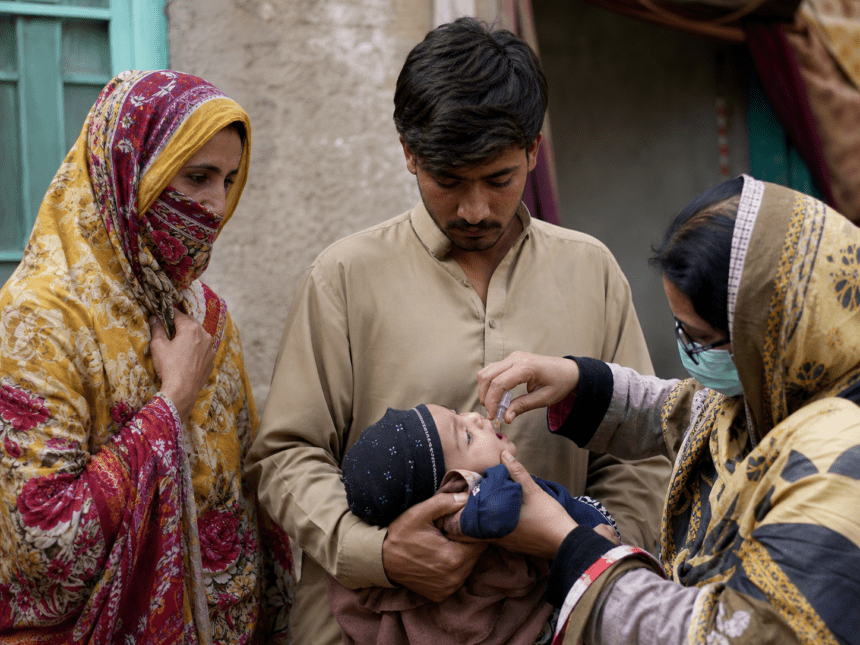
Epidemiologists point to a combination of persistent vaccination refusals and gaps in routine immunization coverage as the primary drivers. In areas like Tank and Lakki Marwat, security concerns and community skepticism have frequently disrupted mobile vaccination teams. “These cases are a reminder that the virus is still circulating in our environment,” a senior official at the National Institute of Health told reporters.
“Every time a child misses a drop, the entire community remains vulnerable.” The 43 cases reported so far in 2024 represent a significant jump compared to the six cases recorded in 2023.
This year’s spread has not been limited to a single province; while Khyber Pakhtunkhwa remains the primary battleground, cases have also surfaced in Balochistan, Sindh, and Punjab, indicating widespread transmission. Government health workers are currently preparing for a new round of immunization drives.
Yet, the challenge goes beyond logistics. Local health departments are struggling to overcome deep-seated mistrust in rural areas, where misinformation about the vaccine’s safety continues to circulate on social media.
The Global Polio Eradication Initiative has expressed concern over the rising numbers, noting that Pakistan remains one of only two countries in the world where polio is still endemic. As the cold season approaches, the focus is shifting toward identifying “hidden” pockets of the virus in sewage samples.
Until the government can ensure that every child regardless of their location or their parents’ hesitation—receives the oral polio vaccine, the trend of new infections is unlikely to break.