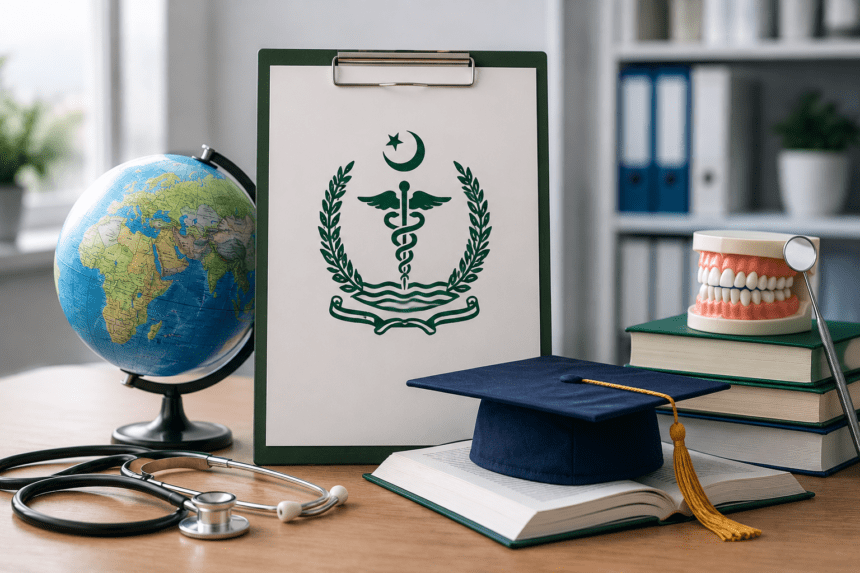
The Pakistan Medical and Dental Council (PMDC) has overhauled the admissions process for students seeking medical and dental education abroad.
New regulations, released Thursday, aim to standardize the recognition of foreign degrees and ensure that students meet domestic academic benchmarks before they return to practice in Pakistan.
The council’s updated policy mandates that all students enrolling in foreign institutions must now possess a valid National Medical and Dental College Admission Test (MDCAT) score. Previously, some students bypassed this requirement, leading to a glut of graduates who struggled to clear the National Licensing Exam (NLE) upon their return.
“We are closing the loophole that allowed students to leave without demonstrating baseline competency,” a PMDC official said. “If you can’t pass the MDCAT, you shouldn’t be training to treat patients, regardless of where that training takes place.
” Under the new guidelines, foreign universities must be listed in the World Federation for Medical Education (WFME) directory. Degrees from institutions not recognized by the WFME will no longer be eligible for registration with the PMDC. This move effectively bars graduates from unaccredited or low-tier foreign colleges from seeking employment in the country’s healthcare sector.
The policy also introduces a mandatory “equivalency certificate” process. Students must submit their academic credentials to the PMDC for verification before they even begin their studies abroad. The council will evaluate the curriculum of the foreign institution to ensure it aligns with the standards set by Pakistan’s medical regulatory framework.
Critics have pointed to the rising costs of private medical education within Pakistan as the primary driver for students seeking cheaper alternatives in countries like China, Kyrgyzstan, and Tajikistan. While the new rules aim to protect the quality of the workforce, some parents argue the PMDC is creating additional hurdles for students who were already struggling to secure a seat in local public medical colleges.
The council has set a grace period for current students already enrolled in foreign programs, though the specifics of that transition remain under review. For those planning to head abroad for the upcoming academic session, the message is clear: the path back to a medical license in Pakistan just got narrower.