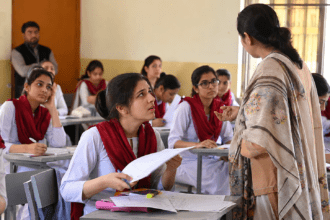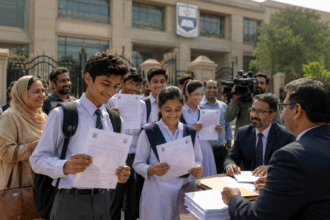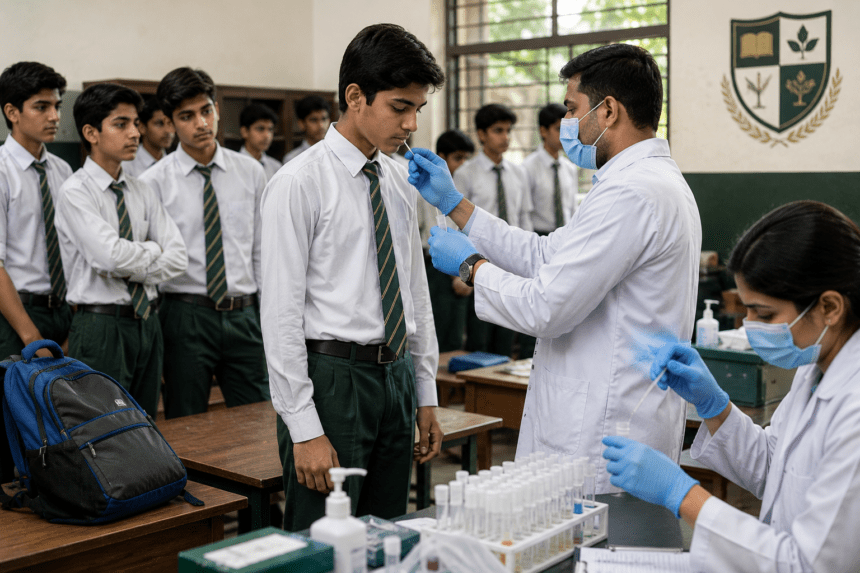
Sindh’s Education Department has ordered mandatory, random drug testing for students across public and private secondary schools, a move aimed at curbing a surge in narcotics use among the youth. The directive, issued late Tuesday, requires school administrations to coordinate with local health authorities to conduct screenings without prior notice. The policy marks a shift in how the provincial government handles substance abuse. Previously, schools largely relied on awareness campaigns and counseling.
Now, the focus has moved to detection. “We can no longer ignore the reality of what’s happening on campuses,” a senior official at the Sindh Education Department told reporters. “Counseling is one thing, but we need to know the scale of the problem before we can fix it.” The decision follows a series of reports from intelligence agencies and local police, indicating that synthetic drugs and hashish are increasingly available near school perimeters in Karachi and Hyderabad.
While the Education Department insists the tests are a preventive measure, the rollout faces immediate scrutiny regarding student privacy and the lack of a clear rehabilitation framework. Critics point to a glaring gap in the policy: testing identifies the presence of drugs, but it does not provide a path to recovery. “If a student tests positive, what happens next?” asked a representative from the Sindh Teachers’ Association.
“Are they expelled? Is there a support system? If the answer is expulsion, we are simply pushing vulnerable children further into the shadows.” The department has yet to release a standardized protocol for handling positive results, leaving many school principals in a bind. Some private school networks have already signaled they may challenge the implementation, citing the potential for stigmatization and the logistical nightmare of managing sensitive health data for thousands of minors.
The provincial government plans to pilot the testing program in selected districts starting next month.
The results of these initial screenings will determine whether the policy becomes a permanent fixture in the province’s education system. For now, parents are left waiting for clarity on whether their children will be tested, how the samples will be handled, and what consequences follow a positive result.
The government’s next move will decide if this is a genuine health intervention or merely a performative measure in the face of a growing crisis.