The thermometer is climbing, and the danger isn’t just discomfort—it’s physical collapse. When temperatures hit triple digits, the body’s cooling system struggles to keep pace. Heatstroke occurs when that system fails entirely, pushing internal temperatures past 104°F (40°C). It is a medical emergency that kills within minutes if not addressed.
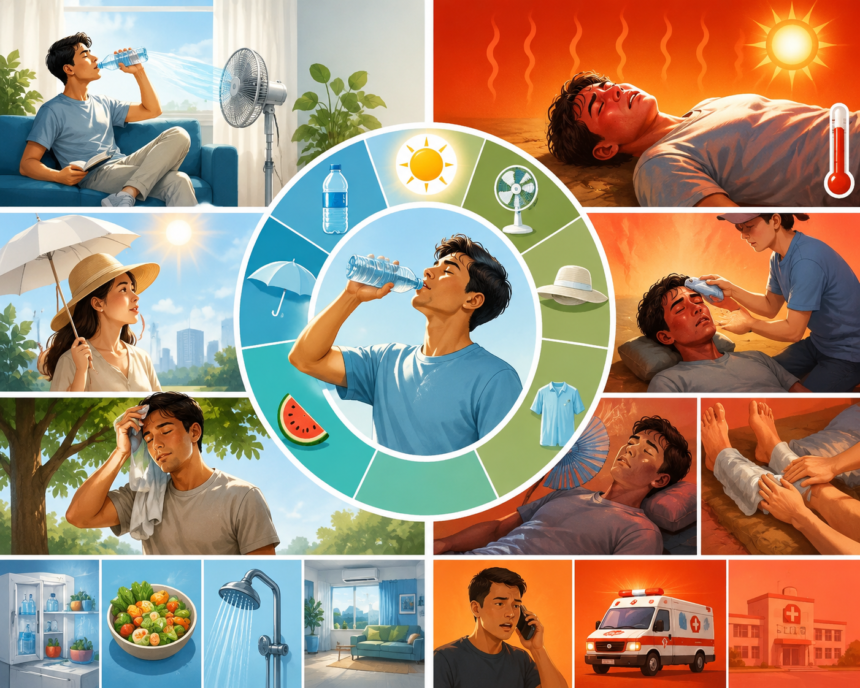
The golden rule for prevention remains simple: hydration and timing. Drink water before you feel thirsty. If you’re waiting for dry lips or a headache to reach for a bottle, you’re already behind the curve. Limit outdoor exertion to the early morning or after sunset. If you must be outside, wear loose, light-colored fabrics that allow sweat to evaporate—the body’s primary method of shedding heat.
Recognizing heatstroke is the difference between a recovery and a tragedy. Forget the “sweating” myth; a heatstroke victim’s skin often turns hot, red, and dry because the body has stopped producing sweat to preserve fluid. Look for confusion, slurred speech, rapid pulse, or loss of consciousness. If you see these signs, do not wait for an ambulance to arrive before acting.
Immediate action is mandatory. Move the person to a shaded or air-conditioned area instantly. Strip away unnecessary clothing. The goal is to lower their core temperature by any means necessary. If water is available, drench them or apply ice packs to the neck, armpits, and groin—the areas where blood vessels are closest to the skin. Do not attempt to force-feed water or medication to someone who is semi-conscious or confused; they could choke.
Medical professionals emphasize that recovery doesn’t end when the temperature drops. Heatstroke causes internal organ stress that lingers for days. Even after a patient is stabilized, they require monitoring for kidney or heart complications.
If you are caring for someone suffering from heat exhaustion—the precursor to heatstroke—get them into a cool environment and provide sips of cool water or electrolyte-rich drinks. If they don’t improve within 30 minutes, or if they begin vomiting, the situation has escalated. Treat it as heatstroke.
Heatwaves are becoming more frequent and more intense. The environment might be unforgiving, but vigilance remains the most effective defense. When the heat hits, prioritize cooling over productivity. Your body won’t give you a second chance to catch up.