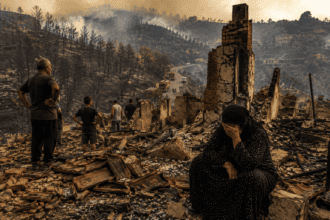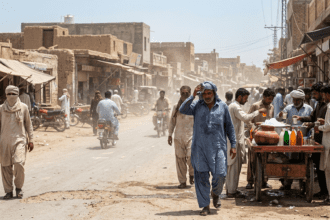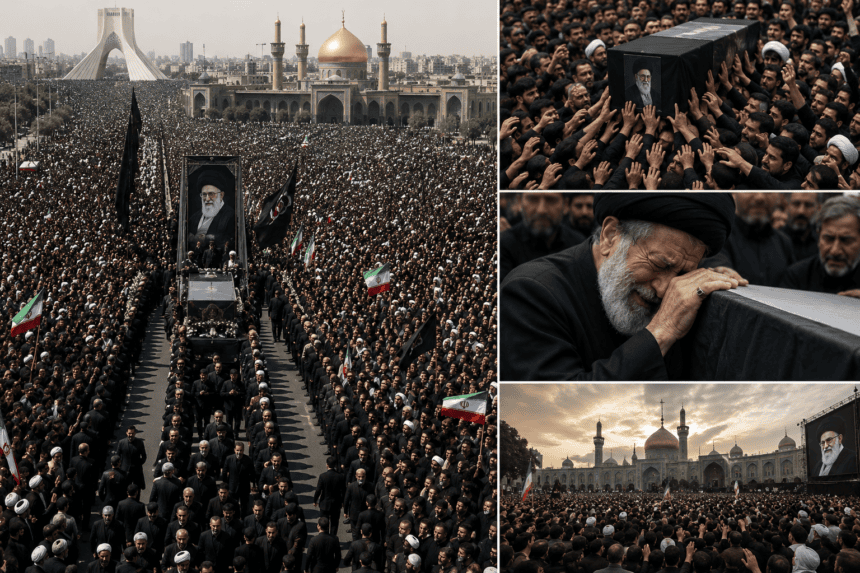
Tehran’s streets are gridlocked today, choked by thousands of mourners following the assassination of Iran’s Supreme Leader. Security forces are on high alert, bracing for a volatile period as the state-managed funeral processions kick off in the capital.
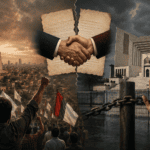
The transition of power remains opaque, yet the public display of grief serves as a test of regime stability. The government has declared a week of mourning, but the massive, surging crowds signal a nation caught between genuine sorrow and simmering political fracture.
“We are here because the system demands it, but no one knows what happens tomorrow,” said a university student who traveled from Isfahan to attend. He stood near a security cordon, his eyes scanning the surrounding rooftops rather than the casket.
State media is broadcasting constant footage of the processions, emphasizing unity and national resolve. Beneath the surface, however, the atmosphere is strained. Military checkpoints have doubled in the last 24 hours, and internet throttling has been reported across several provinces, a recurring tactic during moments of domestic instability.
The assassination has effectively upended the regional balance of power. With no immediate successor formally anointed, the Assembly of Experts faces the impossible task of selecting a new leader while the country remains in a state of shock. Analysts suggest the funeral is less about honoring the past and more about the regime demonstrating it still holds the streets.
For now, the capital remains a powder keg. While the state pushes a narrative of a unified nation in mourning, the heavy presence of the Islamic Revolutionary Guard Corps suggests the leadership is more concerned with containment than consolation.
The procession moves toward the city center tonight. Whether this marks the start of a controlled transition or the beginning of a wider collapse remains the question every citizen is asking, even if none dare say it aloud.