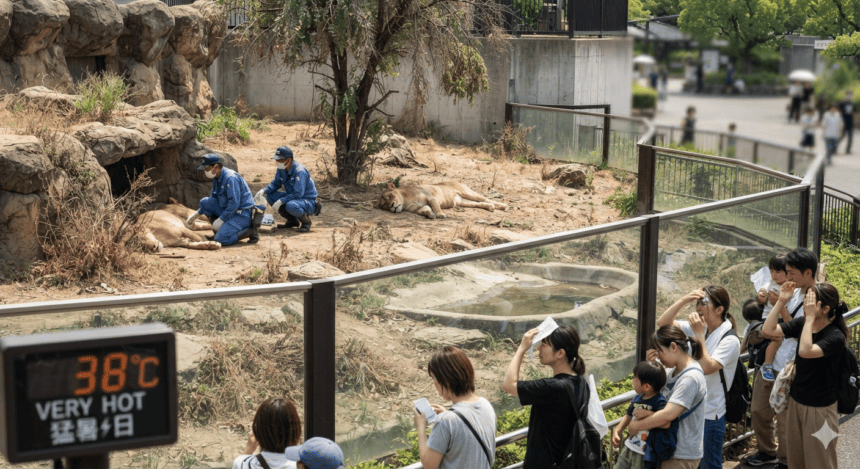
Three lions are dead at Tokyo’s Tama Zoological Park following a week of relentless, record-breaking temperatures that have pushed the city’s infrastructure and its wildlife to the brink.
Zookeepers found the animals unresponsive in their enclosure early Tuesday morning. While officials are still finalizing necropsy reports, early indicators point to heat exhaustion as the primary catalyst. The lions—two females, 21-year-old Mimi and 14-year-old Luna, and one male, 14-year-old Leos—had been showing signs of lethargy for days as Tokyo recorded temperatures exceeding 38°C (100.4°F).
The tragedy has sparked an immediate outcry among animal welfare advocates. Critics argue that the zoo’s aging facilities were ill-equipped to handle the intensifying climate extremes now gripping the Kanto region.
“These animals were seniors,” said a former zookeeper familiar with the facility. “When you have a heatwave of this duration, a standard enclosure isn’t a sanctuary. It’s a furnace.”
Zoo management maintains that they implemented standard cooling protocols, including the use of misting fans and ice blocks. However, those measures proved insufficient against a heatwave that city officials have labeled a “natural disaster.” The Tokyo Metropolitan Government has since ordered a formal review of all animal housing at city-run parks.
This isn’t an isolated incident. Across Japan, zoos are grappling with the reality of a warming climate. Many facilities, designed decades ago, rely on natural ventilation that simply fails when nighttime temperatures refuse to drop below 30°C.
For the Tama Zoological Park, the loss is significant. Mimi, in particular, was a favorite among local visitors, having lived at the zoo for nearly her entire life.
The enclosures remain closed to the public as investigations continue. Whether the zoo will accelerate long-delayed renovation plans for its predator habitats remains the central question for the city’s environment bureau. For now, the remaining lions are being kept in climate-controlled indoor holding areas, shielded from the sun that claimed three of their pride.