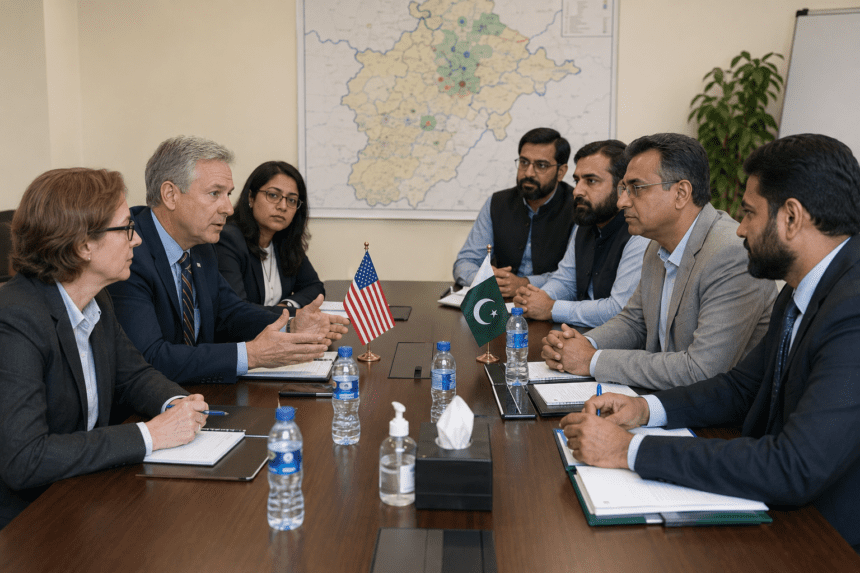
A high-level delegation from the U.S. Centers for Disease Control and Prevention (CDC) met with Rawalpindi’s health leadership Tuesday, signaling increased international pressure to eradicate polio in Pakistan’s garrison city. The talks centered on closing immunity gaps among children in high-risk union councils.
The meeting at the District Health Authority office wasn’t a standard diplomatic exchange. It focused on the persistent presence of the poliovirus in environmental samples taken from the city’s sewage lines.
Despite repeated vaccination drives, the virus remains active in Rawalpindi’s urban pockets a reality that keeps the city on the global health radar. CDC officials scrutinized the current micro-plan for upcoming immunization campaigns. Their primary concern: “missed children.
” These are kids who remain unvaccinated due to parental refusal, migration, or systemic gaps in field worker reporting. The delegation pressed local authorities to move beyond blanket campaigns and adopt a hyper-local strategy. “We aren’t looking for broad numbers anymore,” a source familiar with the discussion said.
“The focus is on the specific households that keep slipping through the cracks.” Rawalpindi remains a critical transit hub, making it a constant vulnerability in the national eradication effort. Polio teams have struggled to track the mobile populations moving between the city and high-transmission zones in Khyber Pakhtunkhwa and Afghanistan.
The CDC team suggested integrating real-time data tracking to identify these mobile clusters before the virus spreads further. District health officials presented a roadmap for the next phase, promising to deploy additional female health workers to address the refusal cases that have plagued previous rounds. They acknowledged that while coverage is high, the “last mile” of the campaign is where the effort consistently falters.
The CDC’s involvement brings more than just technical oversight. It brings the weight of international funding and logistical support, which local authorities are desperate to maintain as they face budget constraints. Whether this visit results in a shift in strategy or remains another high-level sit-down depends on the next round of environmental sampling.
If the virus continues to show up in sewage tests, the current “business as usual” approach will face even tougher questions from international partners.