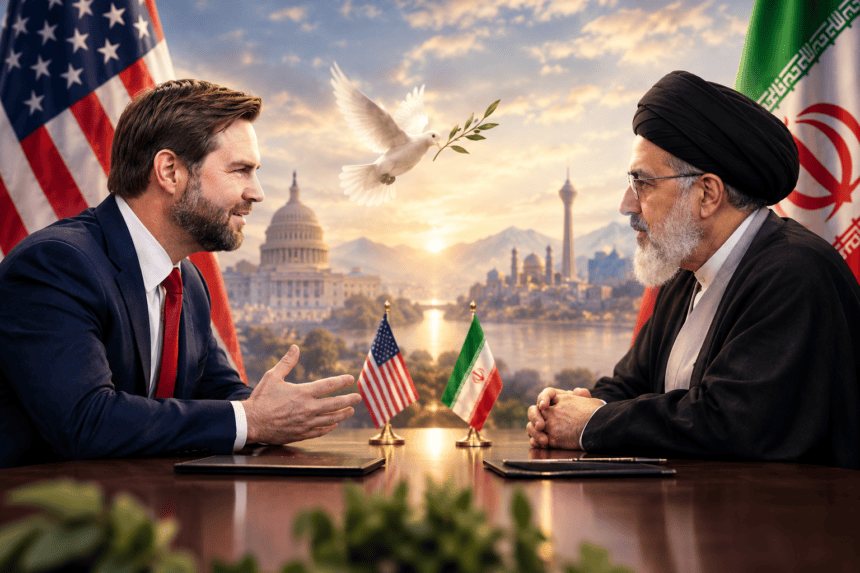
Senator J.D. Vance has opened a backchannel to Iranian officials, proposing a formal restart of peace talks aimed at de-escalating rising tensions across the Middle East. The move marks a departure from the current policy of maximum pressure, signaling a potential pivot in how a future administration might approach one of the world’s most volatile relationships.
The outreach follows months of behind-the-scenes discussions between intermediaries. Vance’s proposal centers on a framework for regional security, focusing on curbing proxy operations in exchange for a phased easing of economic sanctions.
“We need a strategy that prioritizes national interest over perpetual containment,” a staffer familiar with the discussions told reporters. The message to Tehran was simple: the current path is unsustainable for both sides.
Washington’s hawks are already pushing back. They argue that opening a dialogue now grants legitimacy to a regime currently under fire for its regional influence. Critics contend that Tehran will view the proposal as a sign of weakness rather than a genuine attempt at diplomacy.
Tehran’s response has been guarded but distinctively less hostile than usual. Foreign Ministry officials in Iran have stopped short of rejecting the overture, instead pointing to the success of past diplomatic windows as proof that communication remains the only viable path to avoiding a broader conflict.
The proposal comes as energy markets remain sensitive to any shift in the geopolitical climate. A sustained de-escalation could stabilize regional shipping lanes, yet the administration’s current team remains skeptical of any deal that doesn’t involve a total dismantling of Iran’s enrichment infrastructure.
Vance is betting that the political cost of trying—and failing—is lower than the cost of a regional war that the public has little appetite for. Whether this is a genuine policy shift or a tactical maneuver during an election cycle remains the central question for policymakers.
For now, the proposal remains a draft on the table. Both sides are waiting to see if the other is willing to move from rhetoric to reality.