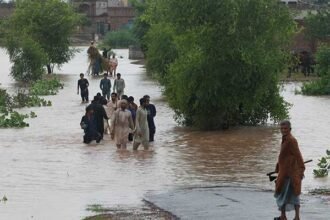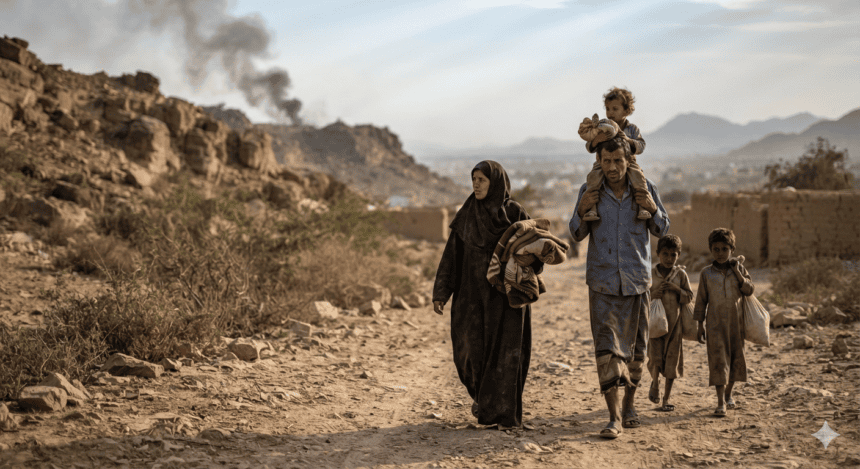
The displacement crisis in Yemen has surged again. Renewed clashes in the Taiz and Ma’rib governorates have forced hundreds of families to abandon their homes with nothing but the clothes on their backs, according to local aid workers and displaced residents.
The fighting, which intensified late last week, centers on long-contested frontline areas. Artillery fire has destroyed civilian infrastructure, leaving residents with little choice but to head toward makeshift camps on the outskirts of safer districts.
“We heard the shelling start at dawn,” said Ahmed Al-Sami, a farmer who fled his village near Taiz with his six children. “There was no time to pack. We left in the clothes we were wearing, and we haven’t looked back.”
His account reflects a broader pattern of sudden, desperate migration. Humanitarian organizations on the ground report that the latest wave of violence has overwhelmed existing facilities. Camps that were already struggling with water shortages and limited food supplies now face a sudden influx of people who lack basic bedding, cooking utensils, or hygiene kits.
The UN’s Office for the Coordination of Humanitarian Affairs (OCHA) estimates that thousands have been displaced in just the last 72 hours. While the exact number fluctuates as families move between villages, the trend is clear: the fragile stalemate that had held in some sectors has collapsed.
Local medical clinics are struggling to cope. Supplies of trauma kits and surgical equipment, already depleted by years of conflict, are running dangerously low. Doctors at a regional hospital in Ma’rib described the situation as “a race against time,” noting that many of the new arrivals are suffering from dehydration and shock.
The violence complicates an already dire economic landscape. With the national currency fluctuating wildly and fuel prices spiking, the cost of reaching safety has become a barrier for the most vulnerable. Many families have spent their last savings on transport, arriving at camps with no means to sustain themselves for more than a few days.
As the frontline shifts, aid agencies are calling for immediate humanitarian corridors to allow for the delivery of life-saving supplies. Without a pause in the shelling, however, the prospects for those trapped in the conflict zones remain bleak.
For families like Ahmed’s, the focus has shifted from rebuilding their lives to mere survival. They are now waiting in overcrowded tents, hoping the next round of artillery doesn’t force them to run again.