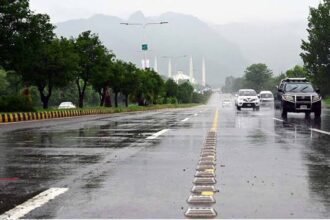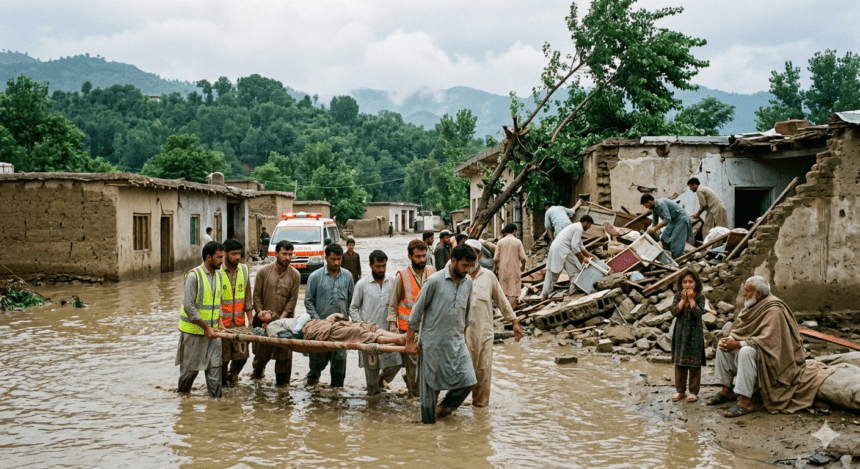
At least seven people died and 33 others sustained injuries as torrential rains hammered Khyber Pakhtunkhwa over the last 24 hours, triggering a series of house collapses and landslides that have left multiple districts reeling.
The Provincial Disaster Management Authority (PDMA) confirmed the toll late Tuesday, identifying roof collapses as the primary cause of the casualties. The victims include women and children trapped under debris in remote areas where rescue operations face significant logistical hurdles due to damaged roads.
The human cost is mounting in districts like Swat, Dir, and Kohistan. Local administration officials are scrambling to reach isolated villages, but mudslides have blocked key arteries, slowing down the delivery of emergency relief supplies and medical aid.
“We are doing everything possible with the limited resources available,” a local rescue official said, speaking on the condition of anonymity because he wasn’t authorized to brief the media. “The biggest challenge isn’t just the rain; it’s the terrain. Getting heavy machinery to these rural spots is nearly impossible right now.”
Hospital staff in Mingora and Peshawar have been placed on high alert as the influx of injured patients continues. Doctors report that many of the wounded suffered fractures and crush injuries, requiring specialized care that local health centers are struggling to provide.
For many families in the region, the destruction of homes isn’t just a weather event—it’s a recurring nightmare. Families who lost their shelters are now exposed to plummeting temperatures in the mountainous belts, with the Meteorological Department warning that the current weather system is expected to persist through the week.
The provincial government has announced emergency compensation for the affected families, though critics argue the financial aid does little to address the systemic lack of disaster-resilient housing in the province’s most vulnerable districts.
As the skies remain overcast, the focus for authorities has shifted from search and rescue to preventing further loss. With soil saturation levels at a breaking point, the threat of secondary landslides remains high, leaving thousands of residents in an agonizing wait for the clouds to break.