Although the Megalodon became extinct millions of years ago, the colossal prehistoric shark continues to captivate scientists and marine enthusiasts alike. Ongoing research is shedding new light on the biology, behavior, and ecological role of one of the largest predators ever known to have lived on Earth.
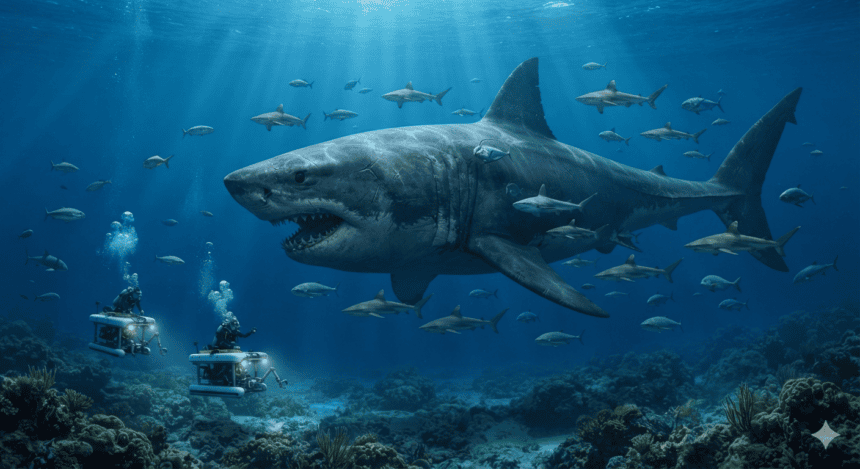
Officially known as Otodus megalodon, the giant shark is believed to have inhabited the world’s oceans between approximately 23 million and 3.6 million years ago. Based on fossil evidence, researchers estimate that an adult Megalodon could grow up to 15–20 meters (50–65 feet) in length, making it significantly larger than today’s great white shark.
Scientists have discovered thousands of Megalodon fossil teeth around the world. Some teeth measure more than 18 centimeters (7 inches) long, providing valuable clues about the shark’s enormous size, powerful bite, and feeding habits. Researchers believe Megalodon preyed primarily on whales, dolphins, seals, and other large marine animals.
Recent studies suggest that the extinction of the Megalodon was likely caused by a combination of factors, including global climate change, cooling ocean temperatures, declining prey populations, and increased competition from emerging predators such as the ancestors of modern great white sharks and killer whales.
Despite frequent internet rumors and fictional documentaries claiming that the Megalodon may still exist, scientists emphasize that there is no credible scientific evidence supporting the idea that the species survives today. Marine researchers agree that a predator of such enormous size could not remain hidden in the modern ocean without leaving clear evidence.
Experts say the Megalodon remains an important subject of scientific research because it helps researchers understand the evolution of sharks, ancient marine ecosystems, and how environmental changes can influence the survival of apex predators.
The fascination surrounding the Megalodon has also inspired documentaries, books, museum exhibitions, and films, making it one of the most recognizable prehistoric marine animals in popular culture.
Scientists continue to study newly discovered fossils using advanced imaging techniques and computer modeling, hoping to answer long-standing questions about the Megalodon’s growth, hunting strategies, and eventual extinction.
Although the giant predator disappeared millions of years ago, the Megalodon continues to symbolize the extraordinary diversity and mystery of Earth’s prehistoric oceans, reminding researchers how much there is still to learn about the planet’s ancient marine life.