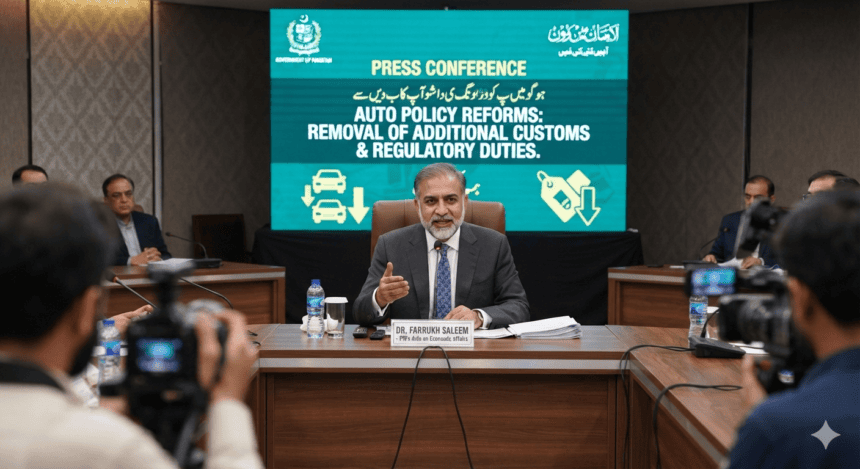
The government plans to strip away additional customs and regulatory duties on the automotive sector, a move aimed at lowering vehicle prices and reviving a stagnant market. Rana Ihsan Afzal Khan, the Prime Minister’s coordinator on commerce, confirmed the policy shift during a recent briefing, signaling a departure from the high-tax environment that has defined the industry for years.
The decision comes as car sales remain in a freefall. Automakers have struggled with record-low volumes, frequent plant shutdowns, and a supply chain choked by import restrictions. By removing these specific duties, the administration hopes to ease the burden on manufacturers who have been forced to pass rising costs directly to the consumer.
“We are looking at the entire structure,” Khan told industry representatives. The goal is to make vehicles accessible again, though he stopped short of providing a specific timeline for when these changes will reflect on showroom price tags.
For the average buyer, the impact remains a question of “how much” rather than “if.” While the removal of regulatory duties is a significant step, the auto sector is still battling high interest rates and a depreciated currency. Experts point out that even with tax relief, the cost of raw materials and energy continues to climb, which could offset the price benefits of the policy change.
The industry has long lobbied for this relief, arguing that the heavy tax load—which often accounts for a massive chunk of a car’s retail price—has stifled growth and innovation. Manufacturers have been operating at a fraction of their installed capacity for months, leading to thousands of layoffs across the supply chain.
Despite the optimism from the Prime Minister’s office, the automotive lobby remains cautious. They have seen similar promises stall in the past due to revenue targets set by the finance ministry. Whether this latest policy shift survives the scrutiny of the upcoming budget cycle is the real test.
If the government follows through, consumers might see the first price adjustments by the next quarter. If it fails, the industry faces yet another year of shrinking demand and empty showrooms.