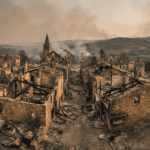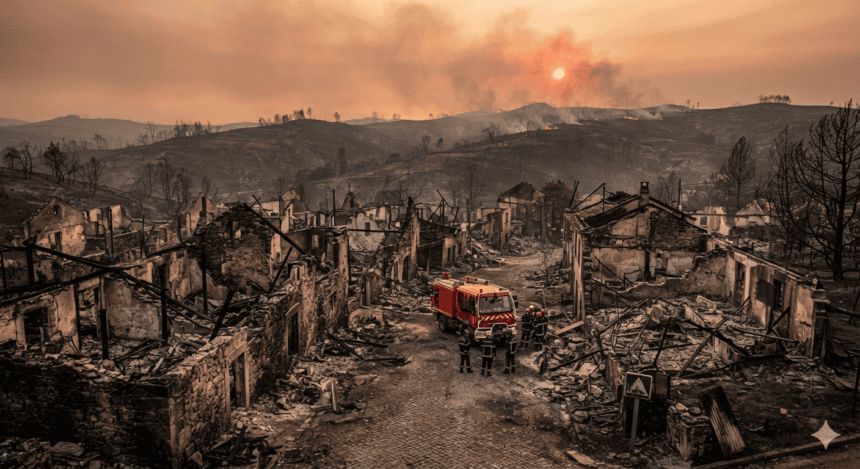
The map of Western Europe is glowing red. From the pine forests of Portugal to the vineyards of southern France, firefighters are battling a series of intense wildfires that have already consumed thousands of hectares and forced mass evacuations.
The immediate trigger is a brutal, lingering heatwave. Temperatures in parts of Spain and Portugal have surged past 42°C (107°F), turning landscapes into tinderboxes. High winds, known locally as “levanter” winds in the south, are pushing embers across firebreaks, making containment nearly impossible for ground crews.
The human cost is mounting. In Portugal, emergency services report over 100 injuries, mostly from smoke inhalation. Thousands of residents in the Leiria district were ordered to abandon their homes overnight as flames crept toward residential blocks. For many, it’s a repeat of the traumatic 2017 fire season that claimed dozens of lives.
Governments are scrambling to respond. Portugal has declared a “state of alert,” mobilizing military personnel to assist overworked civil protection teams. Across the border, Spanish authorities have deployed specialized aerial tankers to drop fire retardant over the Sierra de la Culebra region, where the fire has already wiped out critical biodiversity corridors.
Climate scientists point to a clear trend. These aren’t isolated accidents. The Mediterranean basin is warming 20% faster than the global average, according to the IPCC. The soil moisture levels in these regions are at their lowest point in two decades. When a spark hits this kind of dry brush, the fire doesn’t just burn; it explodes.
Local officials are now facing hard questions about land management. For years, rural depopulation has left vast tracts of forest unmanaged, with dense undergrowth acting as fuel. While the current focus is on saving lives and property, the post-fire investigation will inevitably center on whether European forestry policies are equipped for a future where these “once-in-a-generation” fires happen every summer.
As the sun sets, the horizon remains a wall of orange. Firefighters are bracing for another 48 hours of high temperatures, with no rain in the forecast to offer a reprieve. For the families huddled in makeshift shelters, the only certainty is that the landscape they return to will be irrevocably changed.