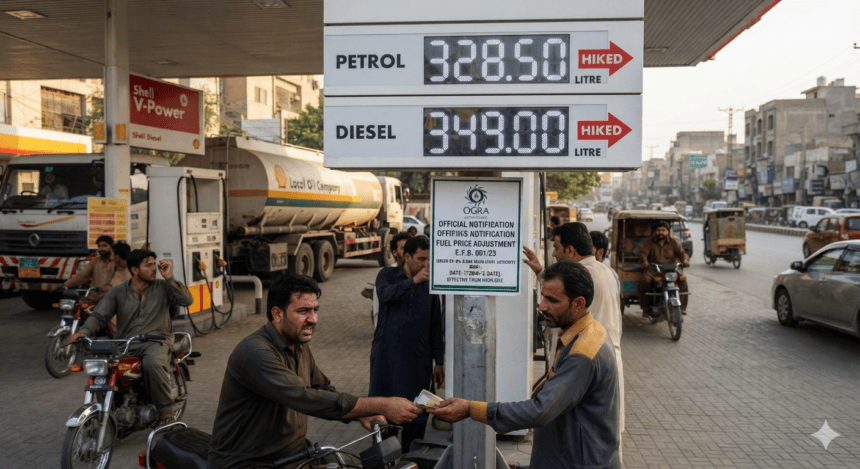
The Oil and Gas Regulatory Authority (OGRA) has confirmed a fresh hike in petroleum product prices, marking another blow to household budgets already strained by persistent inflation.
Effective immediately, the price of petrol has increased by RsX.XX per liter, while high-speed diesel—the primary fuel for the country’s freight and transport sector—has climbed by RsX.XX. The notification, issued late last night, follows the government’s decision to pass on the impact of rising global oil prices and currency depreciation to the end user.
For the average commuter and small business owner, the math is grim. Diesel price hikes ripple through the entire supply chain, inevitably pushing up the cost of food and essential goods. When transport costs rise, the price of produce at the local market isn’t far behind.
The government maintains that these adjustments are necessary to keep the national exchequer afloat and meet conditions set by international lenders. Officials argue that absorbing the cost, as was done in previous cycles, is no longer fiscally possible without triggering a deeper deficit.
Yet, the timing of this hike remains contentious. With manufacturing growth already slowing, industry leaders warn that surging energy costs will force factories to scale back production. The Federation of Pakistan Chambers of Commerce and Industry has previously cautioned that consistent fuel price adjustments stifle competitiveness, making local goods more expensive than their regional counterparts.
This latest adjustment comes after a brief period of price stability that many had hoped would signal a cooling-off phase for the economy. Instead, the market is bracing for another round of inflationary pressure.
As the new rates take effect at pumps across the country, the immediate reality for most remains unchanged: tighten the belt, adjust the commute, and wait to see how much further the cost of living will climb before the next review.