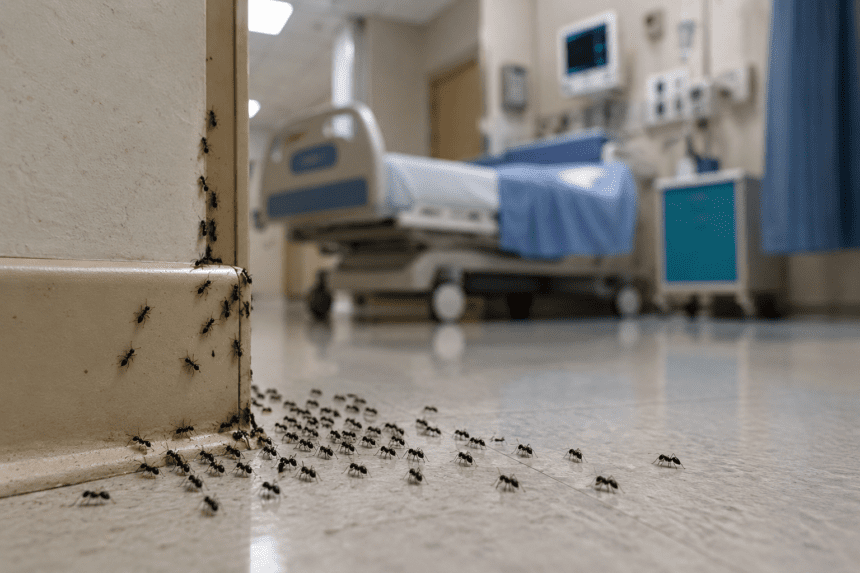
Patients at the Royal Alexandra Hospital in Edmonton are once again dealing with an unwelcome presence in their rooms: ants. This latest infestation marks at least the third time in recent years that the facility has struggled to contain swarming insects, raising fresh questions about sanitation standards in a building already strained by aging infrastructure.
The problem surfaced earlier this week when patients and staff reported ants in multiple areas of the hospital. While the administration has deployed pest control teams to address the immediate surge, the recurring nature of the issue has left families frustrated.
“You come here to get better, not to worry about what’s crawling on the floor,” said one family member who requested anonymity to avoid potential friction with staff. “It’s supposed to be a sterile environment. It’s hard to feel that way when you’re watching ants march across your tray.
” Alberta Health Services (AHS) acknowledged the situation, stating that their environmental services team is working with a third-party contractor to identify the source of the entry points.
They maintain that patient safety remains the priority and that the insects have not affected the hospital’s ability to provide clinical care. However, the “why” remains elusive.
The Royal Alexandra is one of the oldest facilities in the province. Experts point out that aging foundations and complex piping systems often create hidden voids where moisture and warmth attract colonies. Once they establish a foothold in a massive structure like a hospital, eradicating them completely is a Herculean task that standard chemical sprays rarely solve. Hospital officials have promised a deeper inspection of the affected wings, but staff on the ground are skeptical.
One nurse, speaking off the record, noted that while the cleaning crews are diligent, the building’s age is a constant battle.
“We’re fighting a losing war against a structure that’s essentially falling apart,” she said. For now, the hospital continues to operate under its standard protocols, with additional cleaning cycles in place. Whether this latest intervention will finally seal the cracks or simply offer a temporary reprieve remains the central point of contention for those spending their nights in the ward.