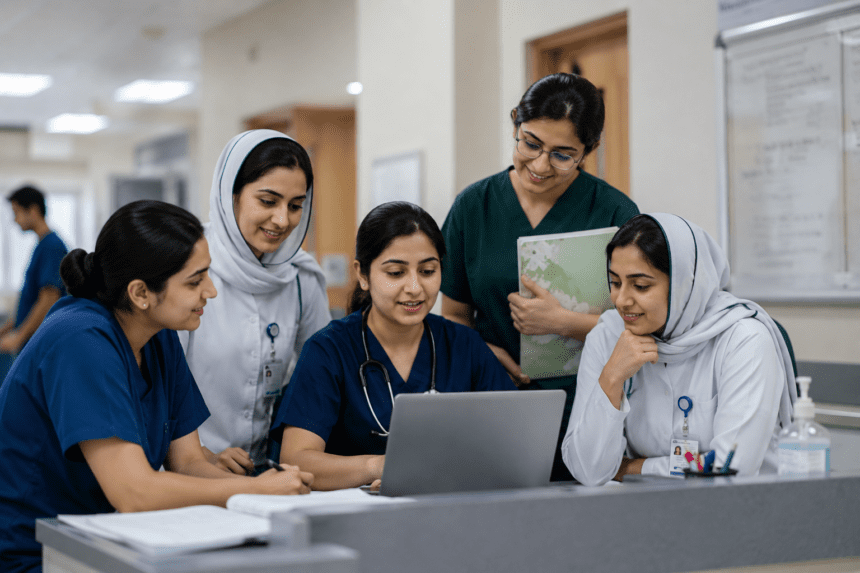
The Aga Khan University (AKU) marked International Nurses Day this week by framing the profession not as a support role, but as the backbone of Pakistan’s future health infrastructure.
The university’s recent symposium brought together practitioners from across the country, focusing on a shift in clinical culture: moving nurses from bedside executors to policy-shaping leaders. For a nation grappling with a chronic shortage of medical staff and an overburdened public health system, the message was clear. Quality care depends less on new building projects and more on how much authority is granted to those managing patient outcomes.
“Nurses are the ones who hold the system together when everything else is stretched to the breaking point,” said Dr. Sulaiman Shahabuddin, President of AKU. He emphasized that the current model of health care in Pakistan remains too physician-centric, a dynamic he argues is unsustainable as the country faces rising non-communicable diseases and an aging population.
The data supports the urgency of this pivot. Pakistan’s nurse-to-patient ratio remains among the lowest in the region, a gap that results in delayed interventions and higher mortality rates in rural districts. AKU’s nursing leadership program aims to address this by training graduates to lead clinics, manage hospital departments, and influence provincial health policy roles previously reserved almost exclusively for doctors.
The event highlighted several alumni who have already begun redesigning care protocols in underserved areas of Sindh and Gilgit-Baltistan. By introducing nurse-led triage and community-based health management, these practitioners have reduced wait times and improved patient recovery rates in facilities that previously lacked consistent oversight.
Critics of the current system often point to the “brain drain,” with thousands of trained nurses migrating to the Middle East and Europe for better pay and professional respect. AKU leadership acknowledged this, noting that keeping talent in Pakistan requires more than competitive salaries; it requires a professional environment where nurses have a seat at the decision-making table.
As the ceremony concluded, the focus remained on the long-term objective. Empowering nurses isn’t just about professional equity it is a survival strategy for a health system that can no longer afford to leave its most vital workforce on the sidelines.